

Raising Healthy Puppies
Raising a healthy puppy involves far more than providing food, vaccinations and a safe place to sleep. The first months of a puppy's life are a period of extraordinary physical, neurological, emotional and behavioural development.
The experiences a puppy has during this time and the care it receives, can influence its health, confidence, behaviour and quality of life for years to come. For the Cavalier King Charles Spaniel, raising healthy puppies also means understanding the breed's particular health considerations and ensuring that puppies are given the strongest possible foundation from the very beginning.
A healthy puppy needs:
appropriate nutrition
veterinary care
preventative healthcare
adequate sleep and rest
safe exercise
positive socialisation
reward-based training
appropriate mental stimulation
gentle handling
a safe environment
careful monitoring of growth and development
protection from preventable disease
a breeder and owner who understand their responsibilities.
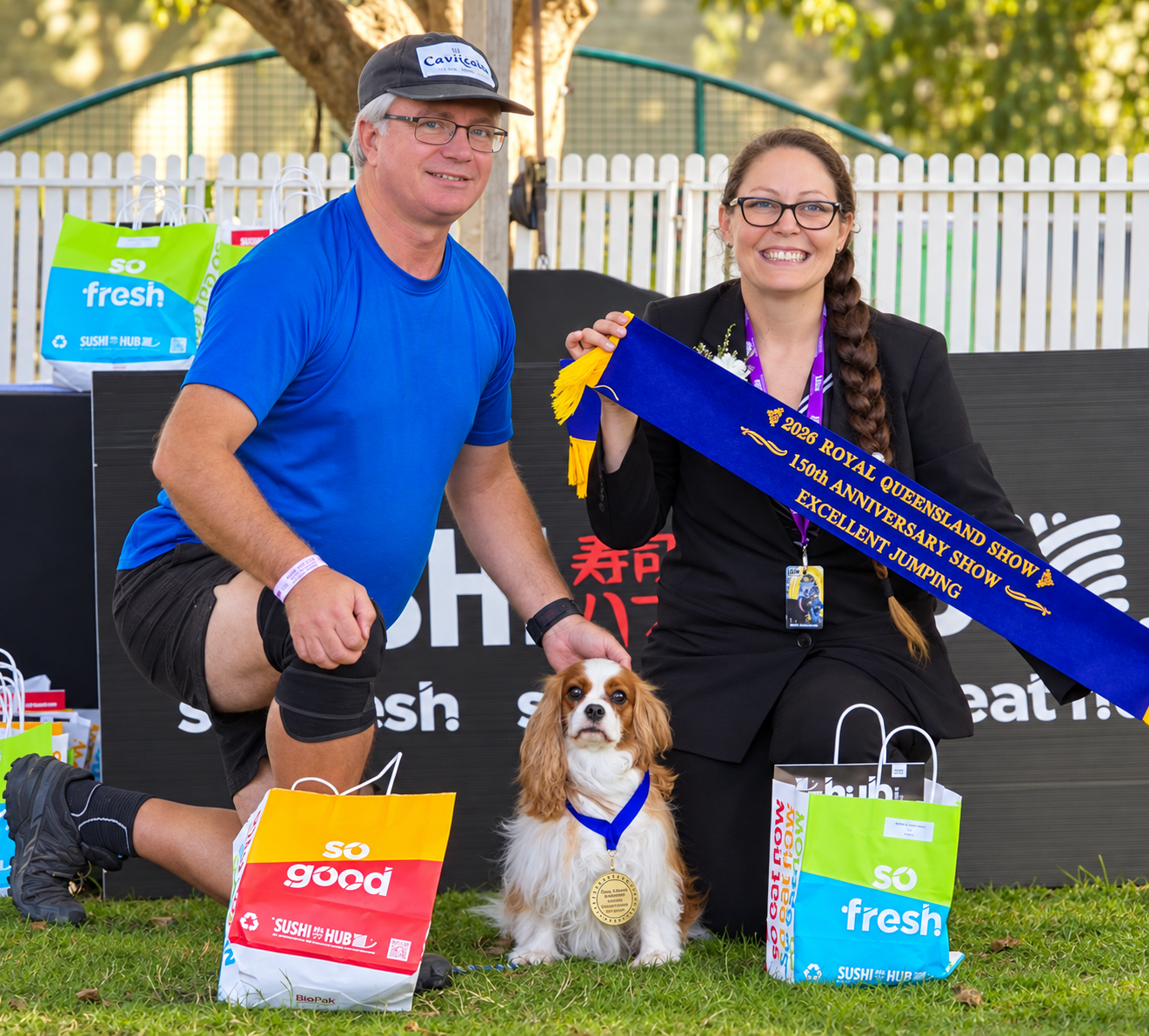
Pictured: Jas (CavRealm Arien Jasperine JD TK.S)
Photo credit: Loraine Carving
Most importantly, raising a healthy puppy is a partnership between breeder, veterinarian and owner. A healthy puppy is not simply a puppy that looks healthy. It is a puppy whose physical, behavioural, emotional and developmental needs are being appropriately supported.
What Does "Healthy Puppy" Really Mean?
Health is more than the absence of obvious illness. A healthy puppy should be developing appropriately for its age and should have its physical and behavioural needs supported.
This includes:
Physical health
The puppy should receive appropriate nutrition, veterinary examinations, vaccinations, parasite prevention and monitoring of growth and development.
Behavioural health
The puppy should have opportunities to learn, explore, play, rest and develop appropriate responses to people, animals and its environment.
Emotional wellbeing
Interactions should be positive and predictable. Puppies should not be routinely frightened, overwhelmed or subjected to harsh handling.
Development
Puppies need age-appropriate opportunities to develop coordination, confidence, communication, independence and problem-solving skills.
Welfare
The puppy should have adequate shelter, comfort, sleep, hygiene, companionship, enrichment and protection from avoidable risks.
The Australian Veterinary Association recommends structured socialisation and habituation for puppies and emphasises that positive early-life experiences contribute to successful lives and good welfare.
Raising Healthy Puppies Begins Before Birth
A puppy's health begins before it is born. Responsible puppy raising therefore starts with responsible breeding. The health, temperament and genetics of the parents can influence the puppies they produce.
Before breeding, responsible breeders should consider:
the health of the sire and dam
breed-specific inherited conditions
appropriate health testing
genetic diversity
pedigree and relatedness
temperament
physical soundness
reproductive health
the age and maturity of the breeding dogs
the welfare of the mother
the ability to provide appropriate care throughout pregnancy and after birth.
For Cavalier King Charles Spaniels, Dogs Australia recommends breed-specific health testing including cardiac assessment, specialist eye examination, DNA testing for Curly Coat/Dry Eye Syndrome and Episodic Falling, and MRI screening for Syringomyelia where available.
Healthy puppies begin with informed breeding decisions.
The First Eight Weeks Matter
A puppy's first eight weeks are not simply a waiting period before it goes to its new home.
This is a critical developmental period.
During these weeks, puppies progressively:
develop their senses
learn to move and explore
interact with their mother
learn from littermates
begin eating solid food
develop social skills
experience new environments
learn to cope with everyday stimuli
begin developing individual personalities
form associations with people and their surroundings.
The breeder therefore has an enormous responsibility.
The Australian Veterinary Association recommends that puppies remain with their mother and littermates until at least eight weeks of age, while receiving appropriate socialisation and habituation during the breeder's care.
The Breeder's Role in Raising Healthy Puppies
A responsible breeder should provide puppies with an environment that supports both physical health and behavioural development.
This includes:
A clean, safe environment
Puppies should be raised in conditions that are hygienic, secure and appropriate for their developmental stage.
Appropriate nutrition
Growing puppies have specific nutritional requirements. Their diet should provide appropriate energy and nutrients without encouraging excessive growth or inappropriate weight gain.
Veterinary care
Puppies should receive appropriate veterinary examinations, vaccinations, parasite control and other care recommended for their individual circumstances.
Gentle handling
Puppies should experience calm, positive human interaction.
Socialisation
Puppies should experience a range of appropriate people, sounds, surfaces, objects and environments.
Sleep
Puppies require substantial amounts of sleep and should have a quiet, comfortable place where they can rest undisturbed.
Enrichment
Age-appropriate toys, exploration and simple problem-solving activities can encourage natural behaviours and provide mental stimulation.
Observation
A responsible breeder should know each puppy individually and notice changes in appetite, behaviour, weight, stool, activity or general condition.
Nutrition: Feeding a Growing Puppy
Nutrition is fundamental to healthy development.
Puppies are growing rapidly and require a diet that is appropriate for their developmental stage.
A complete and balanced puppy diet should provide appropriate amounts of:
protein
fat
carbohydrates
essential fatty acids
vitamins
minerals
energy.
However, more food is not necessarily better. Overfeeding can contribute to excessive weight gain, while inadequate nutrition can interfere with healthy development. The World Small Animal Veterinary Association recommends an individually tailored approach to nutrition and provides veterinary teams with tools for nutritional assessment, body condition and calorie requirements. Choose nutrition based on evidence, not marketing. Terms such as "premium", "natural", "holistic" or "human-grade" do not, by themselves, establish that a food is nutritionally appropriate for a growing puppy.
Your veterinarian can help determine the most appropriate diet for an individual puppy.
Read: Feeding Puppies
Don't Overfeed a Cavalier Puppy
Cavalier King Charles Spaniels are relatively small dogs, but puppies still require careful nutritional management. A puppy should not be deliberately made "big" or "chunky". Instead, aim for steady, appropriate growth and a healthy body condition.
Regularly monitor:
body condition
weight
growth
appetite
stool quality
energy levels.
Your veterinarian can assess whether the puppy is developing appropriately. Healthy growth is more important than rapid growth.
Fresh Water Is Essential
Puppies should have access to clean, fresh drinking water.
Water should be:
readily accessible
clean
refreshed regularly
provided in a safe, stable bowl.
A puppy that suddenly drinks substantially more or less than usual may warrant veterinary attention, particularly if the change is accompanied by other symptoms.
Vaccinations Protect Puppies From Serious Disease
Vaccination is one of the most important components of preventative healthcare.
Core canine vaccines protect against serious diseases including:
canine distemper virus
canine adenovirus
canine parvovirus.
In Australia, these are commonly combined as a C3 vaccine. Puppies generally require a series of vaccinations because maternal antibodies can interfere with vaccine response during early life.
Your veterinarian should establish the appropriate vaccination schedule for your puppy based on:
age
previous vaccinations
health
maternal vaccination history where known
local disease risks
lifestyle
intended activities.
Never assume one vaccination means a puppy is fully protected.
Follow your veterinarian's advice about when your puppy can safely visit public areas and interact with unfamiliar dogs.
Read: Vaccinations
Socialisation Cannot Wait Until Vaccinations Are Finished
This is one of the most important principles in raising a healthy puppy. Puppies have a sensitive developmental period during which positive experiences can have a profound influence on future behaviour. The Australian Veterinary Association recommends that socialisation and habituation begin early and continue after the puppy goes to its new home.
At the same time, young puppies are vulnerable to infectious disease. These two considerations need to be balanced, not treated as mutually exclusive. Before a puppy is fully vaccinated, discuss safe socialisation with your veterinarian.
Appropriate options may include:
carrying the puppy outdoors
observing the world from a safe location
controlled visits with healthy, vaccinated dogs
carefully managed home visits
reputable puppy classes operating appropriate hygiene protocols
exposure to household sounds and activities
car trips
gentle handling
exploring safe surfaces at home.
RSPCA Australia similarly recommends positive socialisation before full vaccination while avoiding animals of unknown health status and public areas such as dog parks where disease exposure may be greater.
What Should a Puppy Be Socialised To?
Socialisation is much more than meeting other dogs. A well-socialised puppy should gradually experience a variety of appropriate:
People
men
women
children
older people
people wearing hats
people carrying bags
people using walking aids
people with different voices and appearances.
Sounds
vacuum cleaners
washing machines
doorbells
traffic
household appliances
thunderstorms
rain
television
normal household activity.
Surfaces
grass
carpet
tiles
concrete
wooden floors
different textures
safe outdoor surfaces.
Experiences
travelling in a car
being gently groomed
having paws handled
having ears examined
having teeth checked
wearing a collar or harness
visiting the veterinarian
being separated briefly from their owner.
RSPCA Australia recommends introducing puppies to a variety of sights, sounds, surfaces, smells, people and experiences in a positive way.
Socialisation Should Never Mean Flooding
More is not always better. A puppy should not be forced into an overwhelming environment simply because someone believes it needs to "get used to it". The Australian Veterinary Association recommends allowing puppies to experience the world at their own pace and avoiding fearful or negative experiences during sensitive developmental periods.
Watch for signs that a puppy is uncomfortable, such as:
attempting to hide
freezing
persistent avoidance
excessive vocalisation
tucked tail
lowered body posture
repeated lip licking
yawning in stressful contexts
refusing food
trying to escape.
If the puppy is overwhelmed, reduce the intensity and give it space. The goal is not simply exposure. The goal is a positive emotional experience.
Read: Puppy Socialisation Guide
Reward-Based Training Builds Healthy Relationships
Training is part of raising a healthy puppy. It teaches the puppy how to live successfully within a human household while building communication and trust.
Recommended foundations include:
responding to their name
coming when called
settling calmly
walking on a lead
gentle handling
toilet training
appropriate chewing
basic cues
impulse control
being comfortable alone for short periods.
RSPCA Australia recommends reward-based training rather than punishment-based methods.
Reward desired behaviours with appropriate:
food rewards
praise
play
attention
access to something the puppy values.
Do not use fear, intimidation or physical punishment as a training strategy.
Toilet Training Requires Patience
Toilet training is a developmental process.
Puppies need frequent opportunities to eliminate, particularly:
after waking
after eating
after drinking
after playing
before bedtime
when they show signs they need to go.
Take the puppy to the appropriate toilet area and reward them immediately when they get it right. Accidents will happen. Do not punish the puppy.
RSPCA Australia recommends reward-based toilet training and advises against punishment for accidents.
Sleep: An Often-Overlooked Requirement
Puppies need a lot of sleep.
A puppy that is overtired can appear:
hyperactive
mouthy
irritable
unable to settle
excessively excitable
less responsive to training.
This does not necessarily mean the puppy needs more exercise. It may simply need sleep. Provide a comfortable, quiet sleeping area where the puppy can retreat and rest without constant interruption.
RSPCA Australia recommends providing a comfortable sleeping area that is cosy, dry and protected from excessive heat or cold.
Read: Sleep and Rest
Exercise: Enough, But Not Too Much
Puppies need physical activity. But growing puppies are not miniature adult dogs. Their bodies are still developing.
Exercise should therefore be:
age appropriate
gradual
varied
supervised
enjoyable
balanced with plenty of rest.
Avoid deliberately exhausting a puppy. Avoid excessive repetitive exercise, particularly activities involving substantial jumping, forced running or prolonged exertion.
RSPCA Australia advises keeping walks short and avoiding over-exercising puppies while they are growing because excessive exertion can affect bone and muscle development. Let the puppy's development guide its exercise, not human expectations.
Read: Exercise and Cavaliers
Mental Stimulation Is Just as Important
Healthy puppies need opportunities to use their brains.
Appropriate enrichment might include:
food puzzles
simple scent games
treat searches
safe chew toys
interactive toys
cardboard-box exploration
basic training games
finding hidden treats
learning new behaviours.
Mental stimulation should be age appropriate and should never create unnecessary frustration or fear.
The aim is to encourage natural behaviours such as:
sniffing
exploring
chewing
manipulating objects
searching
problem-solving.
Read: Mental Enrichment and Enrichment Games
Teething and Chewing
Puppies naturally explore their world with their mouths. During teething, chewing can become particularly intense. Provide safe, age-appropriate chewing options and redirect the puppy away from inappropriate objects.
Puppy-proof the home by keeping away:
electrical cords
small objects
medications
toxic foods
household chemicals
unsafe plants
children's toys
objects that can be swallowed.
If a puppy swallows something potentially dangerous, seek veterinary advice immediately rather than waiting for symptoms.
Read: Teething and Puppies and Biting
Parasite Prevention
Puppies can be susceptible to intestinal worms and other parasites.
Your veterinarian can recommend an appropriate parasite-prevention program based on:
age
weight
location
lifestyle
exposure
household circumstances.
Prevention may involve management of:
intestinal worms
fleas
ticks
heartworm
other regionally relevant parasites.
Do not assume that a product suitable for an adult dog is automatically suitable for a young puppy. Always follow veterinary or product-label guidance for the puppy's age and weight.
Dental Health Starts in Puppyhood
Dental care should begin early. Puppies can be gently introduced to having their mouths examined and teeth touched.
This helps make future dental care easier.
As the puppy matures, establish a routine that may include:
regular toothbrushing
dental examinations
appropriate dental products
monitoring for retained baby teeth.
Early handling can also make veterinary examinations considerably less stressful.
Read: Dental Care
Grooming and Handling Should Be Positive
Cavalier King Charles Spaniels have a coat that requires regular grooming.
Introduce grooming gradually.
A puppy should learn that:
brushes are safe
paws can be handled
ears can be examined
the mouth can be checked
nails can be touched
being gently restrained is not frightening.
Keep early sessions: short + gentle + positive.
Reward calm behaviour. Never force a frightened puppy through an experience simply because you want it completed quickly.
Read: Cavalier Grooming Guide
Teach Puppies That Veterinary Care Is Safe
Veterinary visits should be part of normal puppy life.
Where possible, create positive associations with:
entering the clinic
being weighed
standing on a scale
being touched
having ears examined
having eyes examined
having their mouth checked
listening to their heart
having paws handled.
You can ask your veterinary clinic whether it offers puppy-friendly visits where puppies can briefly enter the clinic without undergoing a procedure.
The objective is to help veterinary care become a normal experience rather than something associated exclusively with needles or illness.
Monitor Your Puppy's Health Every Day
You do not need to be a veterinarian to notice changes.
Simply become familiar with what is normal for your puppy.
Pay attention to:
appetite
drinking
energy
sleep
stools
urination
breathing
eyes
ears
coat
skin
weight
gait
behaviour.
A significant change from your puppy's normal pattern deserves attention.
When Should a Puppy See a Veterinarian Urgently?
Seek veterinary advice promptly if a puppy develops concerning symptoms such as:
difficulty breathing
collapse
extreme lethargy
repeated vomiting
significant or persistent diarrhoea
blood in vomit or stool
inability to keep water down
seizures
severe pain
abdominal swelling
suspected poisoning
inability to urinate
significant trauma
sudden neurological changes.
Puppies can deteriorate quickly.
When in doubt, contact your veterinarian.
Do not rely on social media, online forums or another person's experience to diagnose a sick puppy.
Cavalier-Specific Health Considerations
The Cavalier King Charles Spaniel has several recognised health concerns that responsible owners and breeders should understand.
These include conditions affecting:
the heart
eyes
neurological system
joints
skin
ears
teeth.
Some conditions may become apparent later in life, which is why a puppy appearing healthy at eight or twelve weeks is not a guarantee of lifelong health. This is one reason responsible breeding, appropriate health testing and ongoing veterinary care are so important.
Dogs Australia's Cavalier guidance recommends specific health testing for breeding dogs, including cardiac, ophthalmic, DNA and MRI screening where appropriate.
Read: Cavalier Health Challenges
A Puppy Health Certificate Is Not a Lifetime Guarantee
Prospective puppy owners sometimes assume that a veterinary examination immediately before purchase proves that the puppy is completely healthy. It does not.
A pre-purchase veterinary examination can identify issues present or detectable at the time of examination. It cannot predict every future condition. Similarly: "Vet checked" does not mean "disease free for life".
Responsible breeders should be transparent about known health risks, and owners should maintain appropriate veterinary care throughout the dog's life.
The Importance of Records
Keep your puppy's health information organised.
Records may include:
vaccination certificates
microchip details
veterinary examinations
parasite treatments
health-testing information relating to the parents
DNA testing information where relevant
weight records
medication
insurance information
breeder contact details
Good records can help your veterinarian identify changes over time and provide more informed care.
Microchipping and Identification
Permanent identification is an important part of responsible puppy ownership.
Make sure:
the puppy is appropriately microchipped
the microchip details are correctly recorded
ownership details are updated
your contact information remains current.
If you move house or change your phone number, update your details promptly. A microchip is only useful if the associated information is accurate.
Raising a Healthy Puppy Includes Teaching Independence
A puppy should learn that being alone for short, appropriate periods is safe. This does not mean leaving a puppy alone for long periods.
Instead, gradually teach independence through:
short separations
safe confinement
enrichment
calm departures
calm returns
predictable routines.
The aim is to help the puppy develop confidence without creating unnecessary distress. If a puppy shows significant separation-related distress, seek advice from your veterinarian or a qualified positive-reinforcement behaviour professional.
Children and Puppies
Children and puppies can form wonderful relationships, but they should not be left to manage the relationship themselves.
Children should learn:
not to disturb a sleeping puppy
not to take food or toys away
not to chase the puppy
not to climb on the puppy
not to pull ears or tails
not to hug a puppy tightly
how to recognise when the puppy wants space.
All interactions should be supervised by a responsible adult. A puppy should always have somewhere it can retreat when it wants to be left alone.
Read: Children and Cavaliers
Other Dogs and Pets
Interactions with other animals should be carefully managed.
The ideal companion dog is:
healthy
appropriately vaccinated
behaviourally sound
tolerant of puppies
supervised during interactions.
Do not assume that every adult dog will enjoy having a puppy climb all over it.
A puppy needs to learn appropriate social behaviour, and adult dogs need opportunities to move away.
Read: Introducing a Cat
The Importance of the Puppy's Environment
The home itself is part of a puppy's health program.
Create a safe environment by securing:
electrical cords
toxic substances
medications
cleaning products
toxic plants
small swallowable objects
rubbish bins
unsafe food
open doors and gates
swimming pools and other hazards.
RSPCA Australia recommends creating a safe living space and specifically highlights household dangers such as some foods, plants and chemicals.
Don't Forget Rest During Socialisation
A common mistake is believing a puppy needs to experience everything immediately.
It does not.
A healthy socialisation program includes: experience → recovery → sleep → repeat
A puppy that has spent the day meeting people, exploring new surfaces, travelling in the car and attending puppy school may need substantial quiet time afterwards.
Rest is part of development.
Read: Rest and sleep
A Simple Daily Routine for a Young Puppy
Every puppy is an individual, but a routine might include:
Morning
Toilet → breakfast → gentle play/training → toilet → rest.
Mid-morning
Short socialisation or enrichment activity → toilet → sleep.
Midday
Meal if appropriate for the puppy's feeding schedule → toilet → quiet play → rest.
Afternoon
Short training session → enrichment → toilet → rest.
Evening
Dinner → gentle interaction → toilet → calm family time → bedtime routine.
The precise routine should be adjusted for the puppy's age, feeding requirements, individual temperament and veterinary advice.
What a Responsible Puppy Rearing Program Looks Like
A strong puppy-raising program should gradually provide:
Physical development
Safe movement, exploration and age-appropriate exercise.
Cognitive development
Simple learning, problem-solving and enrichment.
Emotional development
Positive experiences and opportunities to build confidence.
Social development
Appropriate interaction with people and other dogs.
Habituation
Gradual exposure to everyday sights, sounds, surfaces and experiences.
Handling
Positive introduction to grooming, veterinary examination and routine care.
Independence
Gradual learning that being apart from people for appropriate periods is safe.
Recovery
Plenty of sleep and opportunities to retreat from stimulation. The Australian Veterinary Association recommends structured socialisation and habituation while puppies are with breeders and continued socialisation after they move to their new homes.
The First Few Weeks at Home
When the puppy arrives, resist the temptation to do everything at once.
The puppy has just experienced enormous change:
leaving its mother
leaving littermates
leaving its familiar environment
travelling
meeting new people
entering a new home.
Give it time to settle.
During the first days:
establish a predictable routine
provide a quiet sleeping area
maintain appropriate nutrition
offer frequent toilet opportunities
begin gentle training
introduce new experiences gradually
arrange veterinary care
avoid overwhelming the puppy with visitors
prioritise sleep.
RSPCA Australia recommends establishing a safe living space, comfortable sleeping area, balanced nutrition, fresh water, socialisation, training, enrichment, exercise, identification and preventative healthcare for new puppies.
Raising Healthy Puppies: What Breeders Should Provide
Before taking a puppy home, prospective owners should expect appropriate information and documentation.
Depending on the breeder and applicable requirements, this may include:
☐ Puppy identification and microchip details
☐ Vaccination records
☐ Veterinary information
☐ Parasite-treatment history
☐ Feeding information
☐ Pedigree documentation where applicable
☐ Registration information where applicable
☐ Information about the parents
☐ Relevant health-testing information
☐ Written puppy contract
☐ Information about the puppy's routine
☐ Information about socialisation already undertaken
☐ Breeder contact information
☐ Ongoing support.
A responsible breeder should also be willing to discuss the health considerations relevant to the Cavalier King Charles Spaniel.
What Prospective Puppy Owners Should Ask
Before purchasing a Cavalier puppy, ask the breeder:
About health
What health testing has been undertaken on the parents?
Can I see the relevant certificates?
What health conditions occur in the family?
Are there known health concerns in previous offspring?
About the puppy
Has the puppy been examined by a veterinarian?
What vaccinations has it received?
What parasite prevention has been provided?
What food is it eating?
How is its weight and development being monitored?
About socialisation
What people has the puppy met?
What sounds has it experienced?
Has it travelled in a car?
Has it experienced grooming and handling?
Has it experienced different surfaces and environments?
About the future
What support do you provide after the puppy goes home?
What happens if I can no longer keep the dog?
Will you remain interested in the dog's health throughout its life?
The answers, and the breeder's willingness to provide them, can tell you a great deal.
Raising Healthy Puppies Is a Shared Responsibility
The breeder establishes the foundation. The owner continues it. The veterinarian provides professional healthcare guidance. The puppy itself is an individual with its own personality, needs and rate of development. This means the process does not end when the puppy leaves the breeder. The first eight weeks are the beginning, not the finish line.
Socialisation, training, nutrition, preventative healthcare and emotional development continue throughout puppyhood and beyond.
Common Mistakes When Raising Puppies
Mistake 1: Waiting until vaccinations are complete to socialise
This can mean missing valuable developmental opportunities.
Instead, discuss safe early socialisation with your veterinarian.
Mistake 2: Over-exercising
Puppies need movement, but their bodies are developing.
Keep activity age appropriate and avoid excessive exertion.
Mistake 3: Overfeeding
More food does not equal healthier growth.
Mistake 4: Using punishment
Punishment can damage trust and may contribute to fear.
Use reward-based training.
Mistake 5: Too much stimulation
A puppy needs downtime and sleep.
Mistake 6: Socialising only with dogs
People, sounds, surfaces, handling, environments and experiences are equally important.
Mistake 7: Ignoring subtle changes
Puppies can become unwell quickly.
Know what is normal for your puppy.
Mistake 8: Assuming "vet checked" means guaranteed healthy
A veterinary examination is valuable but cannot predict every future disease.
Mistake 9: Relying on social media for medical advice
Your veterinarian should be your primary source of individual health advice.
A Healthy Puppy Checklist
Before bringing your puppy home
☐ Research the breeder
☐ Review the parents' health information
☐ Understand the breed's health considerations
☐ Prepare a safe puppy area
☐ Purchase appropriate food
☐ Prepare safe toys and enrichment
☐ Arrange a veterinary appointment
☐ Confirm vaccination history
☐ Confirm microchip information
☐ Obtain relevant records
☐ Establish a sleep area
☐ Puppy-proof the home
☐ Plan toilet training
☐ Plan safe socialisation
☐ Discuss parasite prevention with your veterinarian.
Every day
☐ Provide appropriate nutrition
☐ Provide fresh water
☐ Allow plenty of sleep
☐ Provide safe exercise
☐ Provide mental enrichment
☐ Practise reward-based training
☐ Provide positive socialisation
☐ Handle gently
☐ Monitor appetite and toileting
☐ Observe behaviour and energy
☐ Check for anything unusual
☐ Provide affection without overwhelming the puppy.
Every week
☐ Monitor weight and body condition
☐ Check ears
☐ Check eyes
☐ Check teeth and mouth
☐ Check paws and nails
☐ Groom appropriately
☐ Review training progress
☐ Introduce appropriate new experiences
☐ Ensure parasite prevention is up to date
☐ Review whether the puppy's routine needs adjusting.
Frequently Asked Questions
What is the most important thing when raising a healthy puppy?
There is no single factor. Healthy puppy development requires a combination of appropriate nutrition, veterinary care, preventative healthcare, socialisation, training, sleep, exercise, enrichment and a safe environment.
When should puppy socialisation begin?
Socialisation should begin during the puppy's early developmental period and continue after the puppy goes to its new home. The Australian Veterinary Association recommends structured socialisation and habituation from an early age.
Can I socialise my puppy before it is fully vaccinated?
Yes, appropriate socialisation can usually begin before full vaccination, but disease exposure must be carefully managed. Discuss your puppy's individual circumstances with your veterinarian. Safe options may include controlled environments, reputable puppy classes and interactions with healthy, vaccinated dogs.
How much should a puppy sleep?
Young puppies require substantial amounts of sleep, although the exact amount varies with age and the individual puppy. Provide frequent opportunities for uninterrupted rest.
How much exercise does a Cavalier puppy need?
Exercise should be age appropriate and gradual. Avoid excessive or forced exercise while the puppy is growing. Your veterinarian can provide guidance appropriate to your puppy's age and development.
What should I feed my Cavalier puppy?
Feed a nutritionally complete and balanced diet appropriate for growth. Your veterinarian can help determine the most appropriate food, quantity and feeding schedule for your puppy.
Should I punish my puppy for accidents?
No. Reward-based toilet training is recommended. Provide frequent opportunities to toilet in the appropriate location and reward successful behaviour.
How do I know whether my puppy is healthy?
Regular veterinary examinations are important, but owners should also monitor appetite, weight, energy, behaviour, toileting, breathing, eyes, ears, skin and general development.
Can a puppy that looks perfectly healthy still develop an inherited disease?
Yes. Some inherited and complex diseases may not be detectable in a young puppy. This is why responsible breeding, appropriate health testing and ongoing veterinary care are important.
What makes a Cavalier puppy different?
The Cavalier King Charles Spaniel has breed-specific health considerations, making responsible breeding, appropriate health screening and lifelong veterinary care particularly important.
In Conclusion…
Raising a healthy Cavalier King Charles Spaniel puppy is about building a foundation for life. It begins with responsible breeding and continues through appropriate nutrition, veterinary care, vaccination, parasite prevention, sleep, exercise, enrichment, socialisation, training and loving, responsible ownership.
The healthiest puppy is not necessarily the biggest, most energetic or most outgoing puppy. It is a puppy whose needs are being understood and met.
Give puppies time to grow.
Give them opportunities to explore.
Give them positive experiences.
Give them plenty of sleep.
Give them appropriate veterinary care.
And, above all, give them the chance to develop into confident, healthy and well-adjusted adult Cavalier King Charles Spaniels.
Healthy puppies don't happen by accident. They are the result of informed breeding, careful raising, appropriate healthcare and a lifetime commitment to their wellbeing.
Related Articles
For the strongest user journey, I would internally link this page to:
References
Australian Veterinary Association. (2024). Puppy and kitten socialisation and habituation.
Dogs Australia. (2026). What to look for when buying a Cavalier King Charles Spaniel puppy.
RSPCA Australia. (2026). How do I care for my new dog or puppy? RSPCA Australia — Caring for Your New Dog or Puppy
RSPCA Australia. (2026). What vaccinations should my dog receive? RSPCA Knowledgebase.
RSPCA Australia. (2024). How can I socialise my puppy? RSPCA Knowledgebase.
RSPCA Australia. (2024). Is socialising my puppy important? RSPCA Knowledgebase.
RSPCA Australia. (2024). What should I do when I bring home a new puppy? RSPCA Knowledgebase.
RSPCA Australia. (2026). How to exercise your puppy.
World Small Animal Veterinary Association. (2024). Global nutrition guidelines.
Disclaimer
The information provided in the Cavalier Knowledge Centre is intended for general educational purposes only and is not a substitute for veterinary advice, diagnosis or treatment.