

DNA Testing Explained for Cavalier King Charles Spaniels
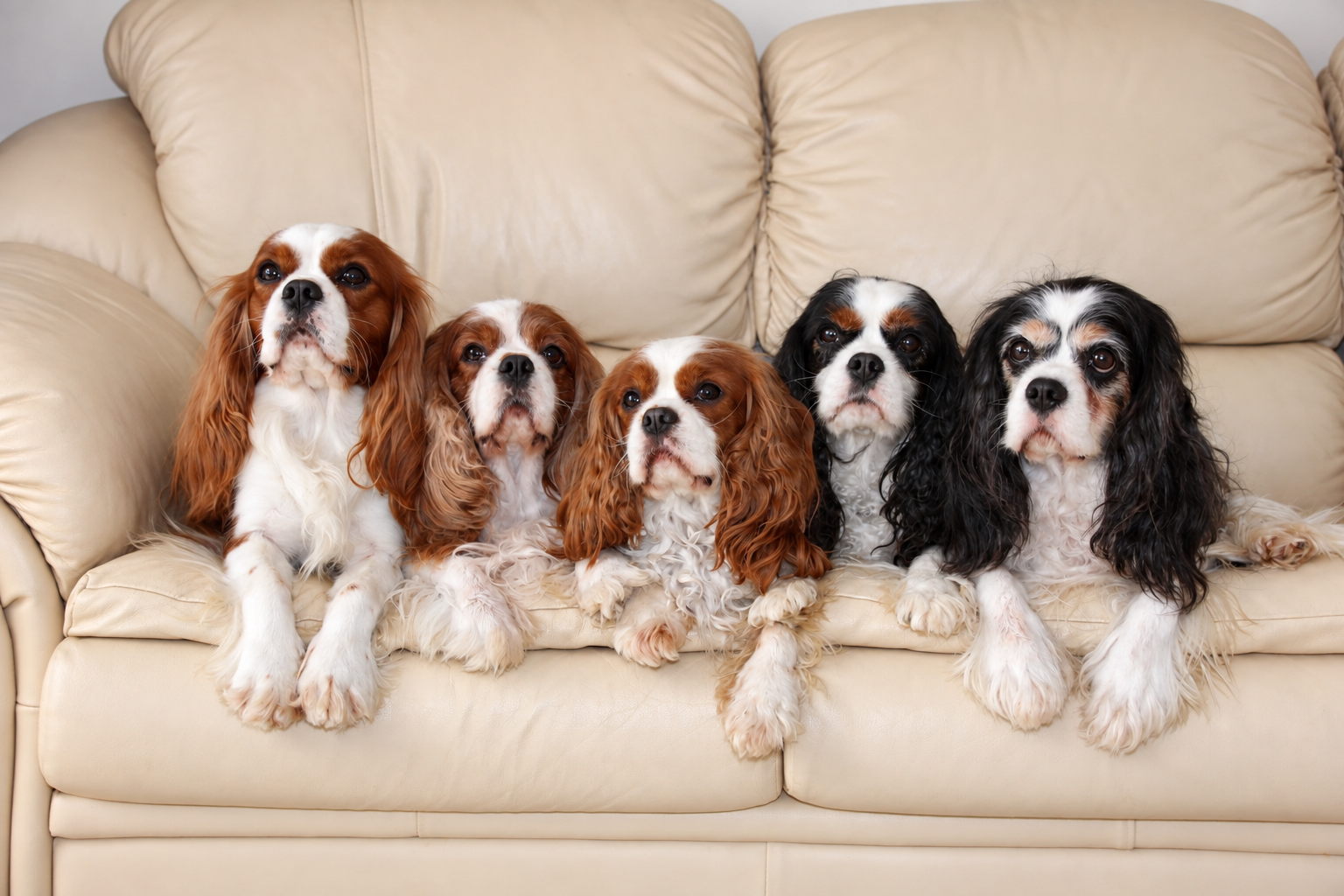
Photo credit: Bronwen Gordon
DNA testing has become an important part of responsible dog breeding. For Cavalier King Charles Spaniels, genetic testing can identify whether a dog carries specific inherited diseases before they are bred, helping breeders make informed decisions that support the long-term health of the breed.
While DNA testing is an incredibly valuable tool, it is only one component of a comprehensive health screening program. Many of the most significant health conditions affecting Cavaliers, such as myxomatous mitral valve disease (MMVD)and Syringomyelia (SM), cannot currently be diagnosed or predicted by a simple DNA test alone.
Understanding what DNA testing can, and cannot, tell you is essential whether you are purchasing a puppy, planning a breeding program or simply wanting to learn more about your dog's health.
What Is DNA Testing?
DNA testing examines your dog's genetic material (DNA) to identify specific inherited genetic variants that may cause disease or be passed on to future generations. Unlike a physical examination or blood test, DNA remains unchanged throughout your dog's life, meaning the results only need to be obtained once.
Testing is usually performed using either:
A cheek (buccal) swab
A blood sample
The sample is sent to a specialised laboratory where it is analysed for known genetic variants associated with inherited diseases.
Why Is DNA Testing Important?
Responsible breeders use DNA testing to reduce the risk of producing puppies affected by inherited diseases.
DNA testing helps breeders:
Identify dogs that carry inherited genetic variants.
Select compatible breeding pairs.
Reduce the likelihood of producing affected puppies.
Preserve valuable genetic diversity.
Make evidence-based breeding decisions.
Importantly, DNA testing should be used to inform breeding decisions, not to unnecessarily remove healthy dogs from breeding programs.
Which DNA Tests Are Available for Cavaliers?
At present, two well-established DNA tests are widely available for inherited conditions that affect Cavalier King Charles Spaniels.
Episodic Falling Syndrome (EFS)
Episodic Falling Syndrome is an inherited neurological disorder affecting muscle control.
Affected dogs may experience episodes of:
Muscle stiffness
Rigid limbs
Difficulty walking
Collapse following excitement or exercise
The condition is caused by a mutation in the BCAN gene and follows an autosomal recessive pattern of inheritance.
DNA testing can identify whether a dog is:
Clear
A Carrier
Affected
Responsible breeding decisions can prevent affected puppies from being born while maintaining valuable genetic diversity.
Curly Coat Dry Eye Syndrome (CCDE)
Curly Coat Dry Eye Syndrome is a rare inherited condition caused by mutations in the FAM83H gene.
Affected puppies may develop:
A rough, curly coat
Dry, irritated eyes
Reduced tear production
Thickened footpads
Skin abnormalities
Like Episodic Falling Syndrome, CCDE follows an autosomal recessive inheritance pattern. DNA testing enables breeders to identify carriers before breeding.
Understanding DNA Test Results
Most DNA laboratories classify results into one of three categories.
Clear (Normal)
A dog that is Clear has not inherited the disease-causing genetic variant being tested.
These dogs:
Will not develop the disease caused by that specific mutation.
Cannot pass that mutation to their puppies.
Carrier
A Carrier has inherited one copy of the genetic variant but usually remains healthy.
Carriers:
Typically show no clinical signs.
Can pass the variant to approximately half of their offspring.
A carrier can often be safely bred to a genetically clear dog without producing affected puppies. Removing every carrier from breeding could unnecessarily reduce the breed's already limited genetic diversity.
Affected
An Affected dog has inherited two copies of the disease-causing genetic variant. Depending on the condition, affected dogs may develop clinical signs and will pass the variant to all of their offspring. Responsible breeding programs aim to avoid producing affected puppies.
DNA Testing Is Only Part of the Picture
Although DNA testing is extremely valuable, it cannot identify every inherited disease affecting Cavaliers. Several important health conditions currently require other forms of screening. These include:
Mitral Valve Disease (MMVD): This requires a Cardiac examination
Chiari-like Malformation (CM): This requires an MRI
Syringomyelia (SM): This requires an MRI
Eye disease: This requires an Ophthalmic examination
Luxating Patella: This requires an Orthopaedic examination
This is why responsible breeders perform multiple health tests, rather than relying solely on DNA testing.
Why Genetic Diversity Matters
A common misconception is that every carrier should immediately be removed from breeding. In reality, this approach can reduce genetic diversity and may unintentionally increase the frequency of other inherited diseases.
Modern breeding strategies aim to:
Avoid producing affected puppies.
Maintain healthy bloodlines.
Preserve valuable genetics.
Improve overall breed health over time.
These decisions should always be made using expert veterinary and genetic advice.
Should Pet Owners DNA Test Their Cavalier?
For most pet owners, DNA testing is optional.
Some owners choose to test their dog:
Out of curiosity.
To learn more about inherited diseases.
Before participating in breeding.
To contribute information to veterinary research.
Your veterinarian can help determine whether DNA testing is appropriate for your individual dog.
Choosing a Responsible Breeder
When purchasing a Cavalier puppy, ask the breeder which health tests have been performed on both parents.
A responsible breeder should be willing to discuss:
DNA testing
Heart examinations
MRI screening (where applicable)
Eye examinations
Patella assessments
Family health history
No breeder can guarantee a puppy will never develop disease, but comprehensive health testing significantly improves informed breeding decisions.
In Conclusion…
DNA testing identifies inherited genetic variants before breeding.
Cavaliers can be tested for Episodic Falling Syndrome (EFS) and Curly Coat Dry Eye Syndrome (CCDE).
Results are typically reported as Clear, Carrier or Affected.
DNA testing complements, but does not replace, other health screening methods.
Responsible breeding combines DNA testing with cardiac screening, MRI, eye examinations and other health assessments.
Related Articles
References
Orthopedic Foundation for Animals. Canine genetic health testing resources.
Kennel Club. Health testing guidance for breeders.
Gill JL, Tsai KL, Krey C, et al. A Canine BCAN Mutation Associated with Episodic Falling Syndrome in the Cavalier King Charles Spaniel.PLoS ONE.
Forman OP, et al. FAM83H Mutation Associated with Hereditary Footpad Hyperkeratosis and Curly Coat Dry Eye Syndrome in Cavalier King Charles Spaniels.Canine Genetics and Epidemiology.
WSAVA. Global recommendations for companion animal health care.