

Socialisation Guide
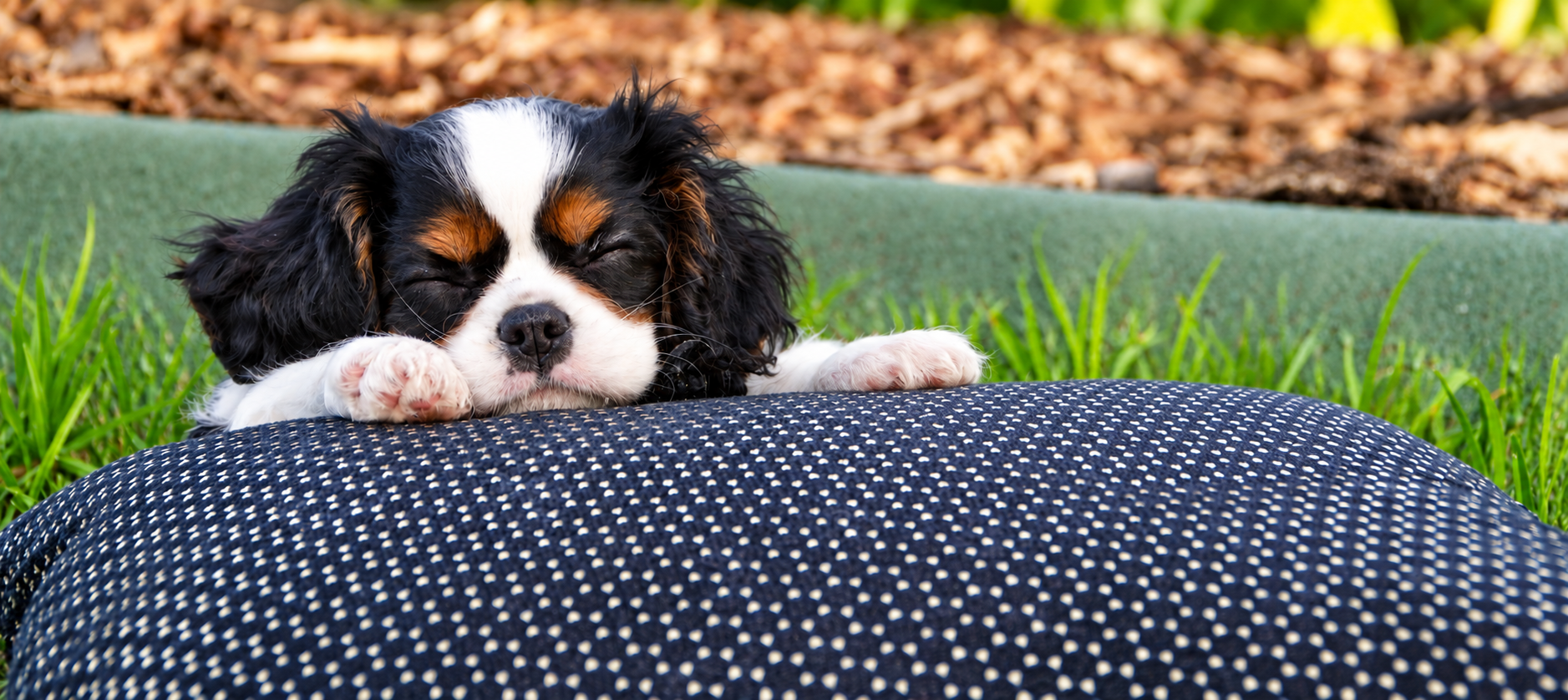
Helping Your Cavalier Puppy Become a Confident Dog
Bringing a Cavalier King Charles Spaniel puppy into your family is the beginning of an exciting journey. One of the most important things you can do during your puppy's early months is provide them with a wide range of positive, safe and carefully managed experiences. This is known as socialisation.
Bringing a Cavalier King Charles Spaniel puppy into your family is the beginning of an exciting journey. One of the most important things you can do during your puppy's early months is provide them with a wide range of positive, safe and carefully managed experiences. This is known as socialisation.
Good socialisation can help your Cavalier learn that the world is a safe and predictable place. It can help them become more comfortable around people, animals, sounds, places, handling and everyday experiences. But socialisation is often misunderstood. It is not simply taking your puppy to the dog park and letting them meet as many dogs as possible.
It is about helping your puppy develop confidence and appropriate responses to the world around them, while allowing them to experience new things at a pace they can cope with.
The Australian Veterinary Association (AVA) recommends that puppies receive structured socialisation and habituation during their early development and that this continues with their new owners.
What is puppy socialisation?
Socialisation is the process of helping a puppy become comfortable with the people, animals, environments and experiences they are likely to encounter throughout their life.
It includes introducing your puppy to:
Different people
Other dogs
Appropriate animals
Children
Different environments
Household noises
Vehicles and car travel
Different surfaces
Objects
Handling and grooming
Veterinary visits
New sights
New smells
New sounds
Being alone for short periods
Wearing a collar or harness
Being touched on different parts of their body
Everyday activities
The aim is not to make your puppy interact with everything. The aim is to teach your puppy: “I can experience something new and still feel safe.”
RSPCA Australia describes socialisation as exposing puppies to a range of experiences so they can learn to cope with different situations, interactions and environments.
Socialisation is more than meeting other dogs
One of the most common misconceptions about socialisation is that it means introducing a puppy to lots of other dogs. Meeting appropriate dogs is certainly part of socialisation, but it is only one small part. Imagine the life your Cavalier is likely to have.
They may eventually encounter:
The vacuum cleaner
A hairdryer
A lawn mower
Traffic
Buses
Delivery people
People wearing hats
People carrying umbrellas
Children running and playing
People using walking sticks
People using wheelchairs
Different flooring
Stairs
Elevators
Veterinary clinics
Grooming salons
Cafés
Outdoor dining
Beaches
Parks
Car parks
Other animals
Visitors to your home
Being handled by a groomer
Having their ears examined
Having their paws handled
Having their teeth examined
A well-socialised dog doesn't necessarily love every one of these things. Rather, they learn that these experiences are normal and can be managed. The Australian Veterinary Association specifically identifies people, animals, noises, objects, vehicles and different places and surfaces as important components of socialisation and habituation.
When should socialisation begin?
Immediately! Puppy socialisation does not begin when your puppy arrives home. Responsible breeders should already be providing puppies with appropriate positive experiences before they leave for their new families.
The Australian Veterinary Association states that structured socialisation should occur while puppies are with their breeder or rearer and should continue after they go to their new owners. Once your puppy comes home, you become responsible for continuing this process.
The critical socialisation period
The first few months of a puppy's life are particularly important. RSPCA Australia identifies approximately 3–17 weeks of age as a critical socialisation period, during which a puppy's experiences can influence their mental health and behaviour into adulthood.
The Australian Veterinary Association describes the sensitive period as beginning at around three weeks and gradually waning at approximately 14 weeks, while also emphasising that dogs continue to learn and benefit from socialisation throughout their lives.
This means that puppy owners have a valuable window of opportunity. However, it does not mean that socialisation stops at 17 weeks. A dog can continue learning throughout its life.
Socialisation does not stop after puppyhood
Although early socialisation is particularly important, continuing to provide positive experiences throughout adolescence and adulthood helps maintain a dog's confidence and adaptability. Your Cavalier may encounter new situations throughout their life.
For example:
Moving house
Travelling
Staying somewhere unfamiliar
Meeting new people
Meeting new dogs
Visiting a new veterinarian
Going to a new groomer
Experiencing new environments
Encountering unfamiliar objects
Changes within the household
Continue introducing new experiences gradually and positively. Think of socialisation as an ongoing part of your dog's education rather than a task that you complete during puppyhood.
The golden rule: keep it positive
A puppy should ideally experience new things while remaining comfortable. If something frightens your puppy, don't force them to approach it. Instead, increase the distance, reduce the intensity of the experience and allow your puppy to observe from somewhere they feel safe.
You can then pair the experience with something your puppy enjoys, such as:
A small food reward
Praise
Play
Gentle interaction
The Australian Veterinary Association emphasises that puppies should be allowed to experience the world at their own pace and that interactions should not be forced.
Watch your puppy's body language
Learning to read your puppy's body language is one of the most important skills you can develop as an owner.
A puppy who is relaxed may:
Have a loose body
Move naturally
Explore willingly
Take treats
Play
Investigate new things
Recover quickly after a surprise
Signs that your puppy may be uncomfortable can include:
Moving away
Hiding
Crouching
Freezing
Avoiding eye contact
Excessive lip licking
Yawning when not tired
Trembling
Tucked tail
Ears held back
Refusing food
Trying to escape
Excessive barking
If your puppy is showing fear, don't insist that they continue. Stop, create distance and allow them to recover. The Australian Veterinary Association specifically warns that overwhelming or frightening experiences can contribute to fear and adverse reactions later in life.
Don't force your puppy to say hello
Your Cavalier does not need to greet every person or dog they encounter. In fact, teaching your puppy that they can calmly observe another person or dog without having to interact with them is an extremely useful life skill.
For example, if someone approaches and asks: "Can I pat your puppy?"
It is perfectly acceptable to say: "We're socialising her, but we're teaching her that she doesn't have to greet everyone."
This is particularly important for a breed like the Cavalier King Charles Spaniel, which is generally known for its affectionate and people-oriented nature. Your puppy should learn that being friendly does not mean they must approach every person or dog.
Socialisation with people
Introduce your puppy to a variety of people in calm and positive circumstances.
Where appropriate, this can include:
Men
Women
Children
Teenagers
Older people
People wearing glasses
People wearing hats
People with beards
People carrying bags
People using umbrellas
People wearing different types of clothing
People with different voices and appearances
Don't overwhelm your puppy by introducing ten new people at once. One calm person can provide an excellent experience. Ask visitors to allow your puppy to approach them rather than immediately reaching over the puppy's head.
Socialisation with children
Children and puppies can form wonderful relationships, but interactions must be carefully supervised.
Children should learn:
Not to chase the puppy
Not to grab the puppy
Not to pull ears or tails
Not to disturb a sleeping puppy
Not to take food away
Not to climb on the puppy
Not to corner the puppy
To allow the puppy to move away
A puppy should always have somewhere quiet to retreat. Dogs Australia recommends teaching children how to interact appropriately with puppies and stresses the importance of supervision, particularly with young children.
Socialisation with other dogs
Meeting other dogs can be an important part of socialisation, but quality is much more important than quantity. Your puppy does not need to meet dozens of dogs. A few calm, friendly, healthy and appropriately vaccinated dogs can provide much better experiences than being overwhelmed by a group of unfamiliar dogs.
Choose dogs that:
Are known to be friendly
Have appropriate social skills
Are healthy
Are appropriately vaccinated
Are comfortable around puppies
Will not overwhelm your puppy
Always supervise interactions. If the adult dog has had enough, give them space. If your puppy becomes overwhelmed, end the interaction.
Puppy school can be valuable
A reputable, reward-based puppy class can provide an excellent opportunity for socialisation and training.
Puppy classes can expose puppies to:
Other puppies
New people
New environments
Handling
Basic training
New sounds
Controlled interactions
RSPCA Australia recommends reward-based puppy classes as a good way to begin socialising puppies.
When choosing a puppy school, look for a program that:
Uses reward-based training
Places strong emphasis on puppy welfare
Controls interactions between puppies
Has appropriate hygiene procedures
Prevents bullying or overly rough play
Teaches owners about canine body language
Allows puppies to rest
Works at an appropriate pace
Your veterinarian can be a good source of recommendations.
Socialisation before full vaccination
This is an important issue for new puppy owners. Many people believe that puppies should remain completely isolated until they have completed their entire vaccination course. However, there is an important distinction between avoiding unnecessary infectious-disease risks and completely preventing a puppy from experiencing the world.
The critical socialisation period occurs before puppies are fully vaccinated, which creates a genuine need to balance behavioural development with infectious-disease protection. The Australian Veterinary Association states that, with appropriate precautions and veterinary guidance, socialisation can occur before full vaccination.
Possible lower-risk experiences may include:
Carrying your puppy outside
Sitting with your puppy in a secure area
Car rides
Visiting friends with healthy, vaccinated dogs
Meeting appropriate people at home
Puppy classes with appropriate vaccination and hygiene protocols
Exploring your own clean, secure yard
Watching the world from a safe location
Your veterinarian should advise you about the level of infectious-disease risk in your area and when your puppy can safely access public places.
Places to avoid before your puppy is fully protected
Until your veterinarian advises that your puppy is adequately protected, be particularly cautious about places where large numbers of dogs of unknown health or vaccination status congregate.
This may include:
Dog parks
Areas heavily used by dogs
Dog toileting areas
Pet shop floors, depending on local disease risk
Public areas contaminated with dog faeces
Unknown dogs whose vaccination status is uncertain
The AVA specifically recommends avoiding public areas frequented by animals of unknown health status, such as dog parks, while puppies are still vulnerable to infectious disease. This does not mean your puppy should be locked inside. It means socialise intelligently.
Socialisation with sounds
Household sounds can be introduced gradually.
Consider exposing your puppy to everyday sounds such as:
Vacuum cleaners
Washing machines
Hairdryers
Televisions
Doorbells
Kitchen appliances
Traffic
Rain
Thunder
Music
Children playing
People talking
Outdoor noises
Start at a low intensity. For example, don't suddenly turn on a vacuum cleaner beside a sleeping puppy. Instead, allow your puppy to hear the sound from a distance while they are relaxed. Pair it with something positive. Gradually increase exposure as your puppy becomes comfortable.
Socialisation with different surfaces
Your puppy may eventually encounter many different surfaces.
At home, safely introduce:
Carpet
Tiles
Timber
Concrete
Grass
Rubber
Mats
Different textures
Let your puppy investigate rather than forcing them onto a surface they find frightening. This can be particularly useful for puppies who will eventually participate in dog sports or travel frequently.
Socialisation and car travel
Car travel should also become a normal experience. Start with short trips. Make sure your puppy is safely restrained using an appropriate travel system.
You might begin with: Sitting in the stationary car → short drive → slightly longer drive → different destinations.
Not every car trip needs to end at the veterinarian. Take your puppy on pleasant journeys so they don't learn that getting into the car always means something unpleasant.
Socialisation and grooming
This is particularly important for Cavalier King Charles Spaniels. Cavaliers require regular grooming and routine handling throughout their lives.
Your puppy should gradually become comfortable with:
Having their ears examined
Having their paws handled
Having their nails touched
Having their coat brushed
Having their face gently handled
Having their teeth examined
Being touched around the body
Being held calmly
Standing on a grooming surface
Hearing grooming equipment
Keep sessions very short.
Touch a paw → reward.
Touch an ear → reward.
Brush gently → reward.
Stop before your puppy becomes overwhelmed.
This creates positive associations with handling.
Veterinary socialisation
Your puppy will need veterinary care throughout their life. Why not start making veterinary visits positive from the beginning? Ask your veterinary clinic whether you can bring your puppy in for a short social visit without an examination.
Your puppy might:
Walk into the clinic
Meet the veterinary team
Receive treats
Sit in the waiting room
Stand on the scales
Go home
These positive experiences can help your puppy learn that visiting the veterinarian doesn't always mean injections, examinations or other procedures. The Australian Veterinary Association also advocates positive interactions during veterinary care.
Socialisation and being alone
Socialisation isn't only about experiences with other people and animals. Your puppy also needs to learn that it is safe to spend some time alone. Gradually teach your puppy to relax independently in a safe environment.
This might involve:
Resting in their bed while you are nearby
Playing independently with an appropriate toy
Spending a short period behind a baby gate
Having a nap while you are in another room
Gradually increasing periods of separation
The aim is not to suddenly leave a young puppy alone for hours. Build independence gradually. AVSAB's puppy socialisation guidance also recommends giving puppies opportunities for independent play and rest.
Socialisation and different environments
Once your veterinarian advises that it is safe, gradually introduce your puppy to different environments.
For example:
Your local café
A quiet park
A friend's house
A pet-friendly outdoor area
A shopping precinct
A beach
A quiet walking path
An elevator
A busy street
A rural environment
Don't try to tick every box in one weekend. Give your puppy time to process each experience.
The "one new thing at a time" rule
A useful approach is to avoid overwhelming your puppy with multiple new experiences simultaneously.
For example, taking a puppy to: A busy shopping centre + loud traffic + lots of strangers + unfamiliar dogs + a new harness + a long car ride could be far too much.
Instead: New harness + quiet walk around the yard might be enough for one session.
RSPCA recommends keeping socialisation sessions short and positive and introducing only a small number of new things at a time to avoid overwhelming the puppy.
Don't confuse exhaustion with successful socialisation
A puppy who falls asleep after an overwhelming experience is not necessarily a well-socialised puppy.
The goal is not: "I exposed my puppy to everything until they were exhausted."
The goal is: "My puppy experienced something new and remained comfortable."
Quality matters far more than quantity.
What if my puppy is frightened?
Don't panic. Fear is a normal emotional response. What matters is how you respond.
If your puppy becomes frightened:
Stop the interaction.
Increase the distance from the trigger.
Allow your puppy to settle.
Don't punish or scold them.
Don't force them closer.
Offer a reward if they are comfortable taking one.
Try again later at a lower intensity.
The Australian Veterinary Association recommends adjusting the intensity of experiences to the individual puppy and allowing them to withdraw if fearful or anxious. If your puppy repeatedly displays significant fear, seek advice from your veterinarian. Early professional guidance can be extremely valuable.
Socialisation should never involve flooding
"Flooding" involves exposing an animal to an intense stimulus and preventing them from escaping or avoiding it. For example, forcing a frightened puppy into the middle of a crowded dog park because you believe they "need to get used to it" is not appropriate socialisation. A puppy should not be forced to interact with something they find frightening. The Australian Veterinary Association specifically cautions that forced interactions can exacerbate fear during sensitive developmental periods.
A Cavalier Socialisation Checklist
Use this checklist as inspiration rather than a list that must be completed within a particular timeframe.
People
☐ Men
☐ Women
☐ Children
☐ Teenagers
☐ Older people
☐ People wearing hats
☐ People wearing glasses
☐ People with beards
☐ People carrying bags
☐ People using umbrellas
☐ People wearing different clothing
Sounds
☐ Vacuum cleaner
☐ Washing machine
☐ Hairdryer
☐ Television
☐ Doorbell
☐ Traffic
☐ Rain
☐ Music
☐ Kitchen appliances
☐ Household activity
Environments
☐ Home
☐ Garden
☐ Car
☐ Veterinary clinic
☐ Grooming environment
☐ Friend's house
☐ Quiet outdoor environment
☐ Busy environment
☐ Different walking surfaces
Handling
☐ Ears
☐ Paws
☐ Nails
☐ Mouth and teeth
☐ Tail
☐ Coat
☐ Face
☐ Collar/harness
☐ Gentle restraint
☐ Being lifted safely
Animals
☐ Calm adult dog
☐ Appropriate puppy
☐ Healthy vaccinated dog
☐ Other appropriate animals
Experiences
☐ Car travel
☐ Being alone briefly
☐ Being around children
☐ Resting while people are active
☐ New smells
☐ New objects
☐ New surfaces
☐ New environments
A Simple Socialisation Plan
Rather than trying to introduce everything at once, build socialisation into everyday life.
Week 1
Focus on:
Your home
Family members
Household sounds
Gentle handling
Toilet-training routine
Car travel
Safe visitors
Resting independently
Week 2
Begin adding:
New people
New surfaces
New household experiences
Short car trips
Positive veterinary visits
Appropriate vaccinated dogs
Week 3 onwards
Gradually expand experiences according to your puppy's confidence and your veterinarian's advice.
Introduce:
New locations
Different environments
More people
Appropriate dogs
Grooming experiences
Short outings
Different sounds
New objects
The precise pace should always be adapted to the individual puppy.
Socialisation is not a competition
You may see other puppies who seem confident everywhere they go. Don't compare your puppy with them. Every puppy has an individual temperament. One puppy may happily investigate a noisy café while another needs several quieter visits before feeling comfortable.
Your responsibility is not to create a puppy who is fearless. It is to help your puppy develop the skills and confidence to cope with life's experiences.
Socialisation and the Cavalier King Charles Spaniel
Cavalier King Charles Spaniels are companion dogs, and many Cavaliers thrive on human interaction and being involved in family life. This makes good early socialisation particularly valuable.
A Cavalier may accompany their family to:
Cafés
Friends' homes
Family gatherings
Holidays
Dog-friendly businesses
Parks
Walking trails
Grooming appointments
Veterinary appointments
Helping your puppy develop confidence across a range of appropriate environments can make these experiences more enjoyable throughout their life. However, remember that breed tendencies do not replace individual temperament. Every Cavalier is an individual.
The Role of the Breeder
Socialisation begins before your puppy comes home. A responsible breeder should understand the importance of early socialisation and provide puppies with appropriate positive experiences.
Ask the breeder:
How have the puppies been socialised?
Have they met different people?
Have they experienced children?
Have they experienced household noises?
Have they travelled in a car?
Have they experienced different surfaces?
Have they been gently handled?
Have they experienced grooming?
How have they been introduced to new experiences?
How do they respond to unfamiliar situations?
The Australian Veterinary Association considers early socialisation and habituation to be an important responsibility of breeders and rearers as well as new owners. This is another reason why choosing a responsible breeder matters.
Good Socialisation is a Gift
Good socialisation is one of the greatest gifts you can give your Cavalier puppy.
It is not about meeting every dog.
It is not about taking your puppy everywhere.
It is not about forcing your puppy to overcome fear.
And it is certainly not about overwhelming them.
It is about carefully introducing your puppy to the world and teaching them that new experiences can be safe, positive and manageable.
Start early.
Go slowly.
Watch your puppy's body language.
Reward calm, confident behaviour.
Never force an interaction.
Protect your puppy from unnecessary disease risks.
And remember that socialisation continues throughout your dog's life.
A confident dog isn't created by experiencing everything at once.
Confidence is built through many small, positive experiences.
In Conclusion…
Socialisation begins with the breeder and continues throughout your puppy's life.
The first few months are a particularly important developmental period.
Socialisation means much more than meeting other dogs.
Introduce people, animals, sounds, surfaces, environments, handling and everyday experiences.
Keep experiences short, positive and appropriate for your puppy.
Never force a frightened puppy to interact.
Learn to recognise your puppy's body language.
Quality of experiences is more important than quantity.
Puppy classes can provide valuable controlled socialisation.
Socialisation can begin before full vaccination when appropriate precautions are taken and your veterinarian agrees.
Avoid high-risk public areas such as dog parks until your veterinarian advises they are safe.
Continue socialisation beyond puppyhood.
Seek professional advice early if your puppy is showing persistent or significant fear.
References
American Veterinary Society of Animal Behavior. (2008). AVSAB position statement on puppy socialization. https://avsab.org/resources/position-statements/
Australian Veterinary Association. (n.d.). Puppy and kitten socialisation and habituation. https://www.ava.com.au/policy/puppy-and-kitten-socialisation-and-habituation
Dogs Australia. (n.d.). Early care for puppies. https://www.dogsaustralia.org.au/health-wellbeing/early-care-for-puppies/
RSPCA Australia. (2024, June 19). Is socialising my puppy important? RSPCA Knowledgebase. https://kb.rspca.org.au/categories/companion-animals/dogs/puppies/is-socialising-my-puppy-important
RSPCA Australia. (2023, February 7). How can I socialise my puppy? RSPCA Knowledgebase. https://kb.rspca.org.au/categories/companion-animals/dogs/puppies/how-can-i-socialise-my-puppy
RSPCA Australia. (n.d.). What should I do when I bring home a new puppy? RSPCA Knowledgebase. https://kb.rspca.org.au/categories/companion-animals/dogs/puppies/what-should-i-do-when-i-bring-home-a-new-puppy
RSPCA Australia. (n.d.). Can you give me some advice on caring for my dog? RSPCA Knowledgebase. https://kb.rspca.org.au/categories/companion-animals/dogs/caring-for-my-dog/can-you-give-me-some-advice-on-caring-for-my-dog