

Exercise Requirements
Exercise Requirements for Cavalier King Charles Spaniels
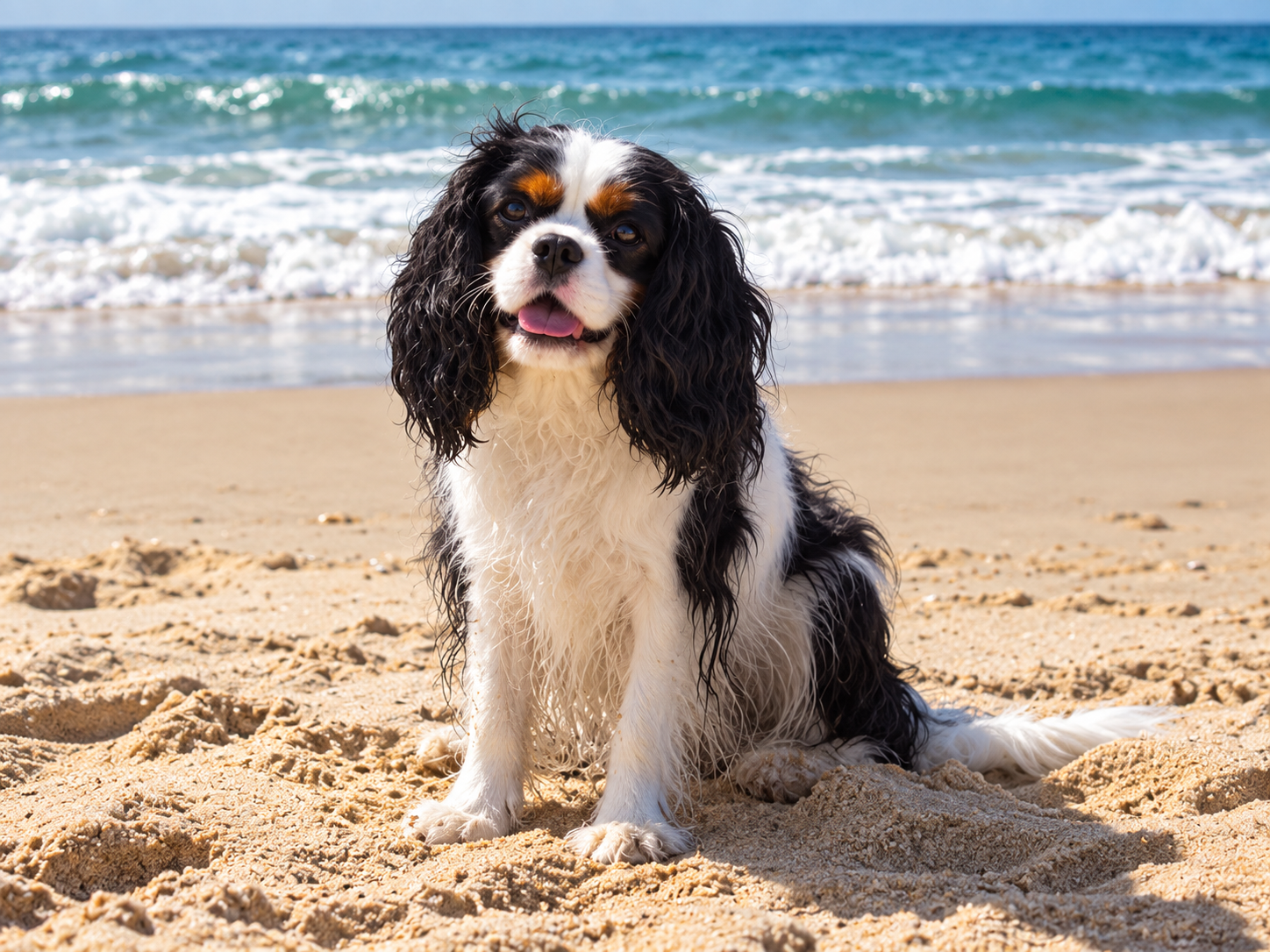
Pictured: Austen.
Photo credit: Bronwen Gordon
Cavalier King Charles Spaniels may be a small companion breed, but they are not simply lap dogs. They are active, intelligent and social dogs who benefit from regular opportunities to walk, explore, sniff, play, learn and interact with their people.
Providing the right amount and type of exercise is an important part of responsible Cavalier ownership. Regular activity supports physical fitness, helps maintain a healthy body condition and provides valuable mental stimulation. At the same time, exercise needs to be appropriate for the individual dog. Age, fitness, temperament, weather, mobility and health conditions can all influence how much activity a Cavalier can safely enjoy.
There is therefore no single number of minutes that is "right" for every Cavalier. The goal is to develop an exercise routine that keeps your dog fit, engaged and happy without pushing them beyond their physical capabilities.
The best exercise routine for a Cavalier is not necessarily the longest one. It is a routine that provides appropriate physical activity, mental stimulation, exploration and enjoyment while respecting the individual dog's age, health and limits.
How Much Exercise Does a Cavalier King Charles Spaniel Need?
There is no scientifically established universal exercise quota that applies to every Cavalier King Charles Spaniel. A healthy adult Cavalier will generally benefit from regular daily physical activity, but the appropriate amount depends on the individual.
Factors include:
Age
Physical condition
Fitness level
Weight
Temperament
Exercise history
Environment
Weather
Mobility
Musculoskeletal health
Cardiac health
Other medical conditions

Pictured: Blossom
Photo credit: Carolyn Dakin
The RSPCA advises that most dogs need regular exercise at least once a day and that exercise can include walks, off-leash activity and structured play. It also emphasises that exercise should be appropriate to the individual dog.
Rather than concentrating on a stopwatch, learn to observe your Cavalier. A healthy exercise routine should leave your dog appropriately exercised, not exhausted.
Cavaliers Are Active Companion Dogs
The Dogs Australia breed standard describes the Cavalier King Charles Spaniel as active, graceful and well balanced, with a sporting and affectionate character. This is worth remembering when considering the breed's exercise requirements. Although Cavaliers are famous for their love of cuddles and laps, they also enjoy participating in everyday life.
Many Cavaliers enjoy:
Walking
Sniffing
Exploring
Playing
Training
Scent work
Dog sports
Swimming, where appropriate and safely supervised
Social activities
Interactive games
The best exercise routine combines several of these rather than relying exclusively on repetitive physical activity.
Exercise Is About More Than Physical Fitness
A walk is not simply a way to "tire your dog out". It can provide an enormous amount of sensory and mental stimulation.
During a walk, your Cavalier can:
Smell new scents
Investigate their environment
See different sights
Hear different sounds
Encounter different surfaces
Make appropriate choices
Practise calm behaviour
Spend quality time with you
The RSPCA specifically recommends allowing dogs opportunities to sniff and explore during walks. This means a slow, interesting walk can sometimes be more enriching than a much faster walk covering a greater distance.
The Difference Between Exercise and Enrichment
Exercise and enrichment overlap, but they are not identical.
Physical exercise
Helps your Cavalier move their body and maintain physical fitness.
Examples include:
Walking
Free movement
Running, where appropriate
Playing
Swimming, where safe and suitable
Mental enrichment
Gives your dog opportunities to think, investigate and use their senses.
Examples include:
Sniffing
Treat hunts
Puzzle feeders
Scent work
Training
Searching
Problem-solving
The ideal routine includes both.
Move the body.
Use the brain.
Explore the world.
Then rest.
Daily Walks
For a healthy adult Cavalier, regular walks are an important part of a balanced lifestyle. But don't think that every walk needs to be a fitness workout.
Consider varying your walks.
The brisk walk
Useful for physical activity.
The sniffing walk
Slower, with plenty of opportunities to investigate scents.
The training walk
Incorporates simple reward-based training.
The exploration walk
Visits a safe, appropriate environment with different sights, smells and surfaces.
The social walk
Where appropriate, provides opportunities for calm interaction with familiar people or suitable dogs. Variety helps prevent every outing from becoming repetitive.
Let Your Cavalier Sniff
This deserves special emphasis. Don't rush your dog through every interesting smell. Your Cavalier's nose is an important way of experiencing the world. Allowing appropriate sniffing during walks can turn an ordinary outing into a rich sensory experience.
Your dog may want to stop at:
Trees
Grass
Posts
Bushes
Paths
Other appropriate scents
You don't have to allow unlimited time at every single object, but building genuine opportunities for sniffing into walks is worthwhile.
The RSPCA specifically identifies sniffing and exploring as important natural behaviours and recommends giving dogs opportunities to engage in them.
Exercise Requirements for Cavalier Puppies
Puppies are not small adult dogs. Their bodies are developing, and exercise needs to be introduced gradually.
The RSPCA recommends short walks for puppies and cautions against over-exercising and over-exertion while they are growing. Puppies should be allowed to rest when they become tired rather than being pushed to continue.
Puppy exercise should focus on:
Short, gentle walks when appropriate
Free play in a safe environment
Exploration
Sniffing
Gentle games
Basic training
Age-appropriate socialisation
Plenty of rest
Don't Force a Puppy to Exercise
This is one of the most important rules.
Avoid activities such as:
Long walks
Fast-paced walks
Jogging with your puppy
Running beside a bicycle
Excessive ball throwing
Repetitive jumping
High jumping
Frisbee-style games
Forced running
The RSPCA specifically advises against forced exercise such as jogging, fast-paced or very long walks and activities involving jumping for puppies. Your puppy may become extremely excited and continue playing even when tired. Excitement isn't the same as physical capacity. Watch your puppy and provide opportunities to stop and rest.
How Do I Know If My Puppy Is Tired?
Puppies can be surprisingly difficult to read.
Watch for:
Sitting down
Lying down
Falling behind
Becoming less coordinated
Losing interest
Becoming unusually excitable or irritable
Repeatedly stopping
If your puppy sits or lies down during a walk, the RSPCA recommends allowing them to rest and waiting to see whether they choose to continue. If they are too tired to continue, end the walk and head home, carrying them if necessary.
Puppy Vaccinations and Exercise
Puppies need opportunities to experience the world during their important early developmental period. However, infectious disease risk must also be considered.
The RSPCA recommends that puppies complete their routine puppy vaccinations before visiting public places such as parks where they may encounter contaminated environments or other dogs. Your veterinarian can advise when your puppy is sufficiently protected for particular activities. Before full vaccination, puppies can still have carefully managed experiences.
For example:
Carrying your puppy outdoors
Exploring your own secure environment
Experiencing household sounds
Meeting appropriate people
Attending a properly conducted puppy preschool when your veterinarian considers it appropriate
Socialisation should not simply be put on hold until vaccination is complete. Instead, discuss safe options with your veterinarian.
Exercise for Adult Cavaliers
Once your Cavalier is physically mature and accustomed to regular activity, exercise can gradually become more varied. A healthy adult might enjoy a combination of:
Daily walking
plus
Free movement
plus
Play
plus
Mental enrichment
plus
Rest
The exact balance will depend on the dog.
A young, fit Cavalier may happily enjoy longer walks and more active games than an older Cavalier.
Don't Judge Exercise by Distance Alone
Two dogs can walk the same distance and have completely different experiences.
For example:
Dog A: Walks quickly for 45 minutes without stopping.
Dog B: Walks for 30 minutes, spends time sniffing, investigates the environment, practises training and explores different surfaces.
Both have exercised. But the second walk may provide considerably more sensory and mental stimulation. Quality matters.
Off-Leash Exercise
Safe off-leash activity can provide Cavaliers with opportunities to move at their own pace, explore and make choices.
Appropriate options may include:
A secure backyard
A securely fenced private area
A suitable fenced dog park
Other legally permitted, secure environments
The RSPCA notes that dogs can benefit from safely running freely in enclosed areas and recommends that off-leash dogs remain under appropriate control.
Safety comes first
Before allowing your Cavalier off lead, consider:
Recall reliability
Fencing
Other dogs
Traffic
Wildlife
Water
Heat
Local regulations
Your dog's temperament
If your Cavalier cannot reliably return when called, an unsecured public environment may not be appropriate.
Exercise and Dog Parks
Dog parks are not automatically suitable for every Cavalier. Some dogs love them. Others find them overwhelming. Consider whether your Cavalier actually enjoys the experience.
Watch for:
Relaxed play
Appropriate social interaction
Willing participation
Ability to move away from other dogs
Appropriate breaks
Be cautious if your dog is:
Frightened
Overwhelmed
Constantly chased
Hiding
Trying to escape
Persistently avoiding other dogs
Becoming increasingly aroused or distressed
Exercise should improve your dog's life, not create fear or stress.
Exercise and Reactive Cavaliers
If your Cavalier reacts strongly to other dogs, people, bicycles, cars or particular environments, simply taking them into increasingly busy places may not solve the problem. Exercise should be adapted to the individual dog.
Consider:
Quieter walking routes
Less busy times
Greater distance from triggers
Sniffing activities
Secure private exercise
Training
Enrichment at home
If your Cavalier's behaviour is difficult to manage, seek advice from your veterinarian and an appropriately qualified behaviour professional.
Exercise for Senior Cavaliers
Exercise remains important throughout a Cavalier's life. However, the type and amount may need to change as your dog ages.
An older Cavalier may benefit from:
Shorter walks
More frequent walks
Gentle exploration
Sniffing
Controlled free movement
Low-impact play
Mental enrichment
Watch for changes in:
Stamina
Walking speed
Gait
Willingness to exercise
Recovery after exercise
Ability to climb stairs
Ability to jump
Signs of discomfort
A sudden reduction in willingness to exercise should not simply be dismissed as "getting old". Pain or illness may be involved.
Exercise for Cavaliers With Health Conditions
This is particularly important for the Cavalier King Charles Spaniel. The breed has recognised health concerns, including cardiac and neurological conditions, and some Cavaliers may have exercise limitations because of individual health problems. There is no single exercise prescription for every Cavalier.
If your dog has been diagnosed with a health condition, ask your veterinarian:
How much exercise is appropriate?
What intensity is safe?
Should exercise be divided into shorter sessions?
Are there activities to avoid?
What warning signs should I watch for?
Does exercise need to change as the condition progresses?
Never use a generic breed exercise recommendation in place of individual veterinary advice.
Exercise and Cavalier Heart Health
Heart health deserves particular attention in this breed. A Cavalier diagnosed with heart disease may have very different exercise requirements from a healthy Cavalier of the same age.
Depending on the individual dog's condition, your veterinarian may recommend changes to:
Duration
Intensity
Frequency
Environmental conditions
Recovery periods
Stop exercising and seek veterinary advice if your Cavalier develops concerning signs such as:
Unusual breathing difficulty
Collapse
Fainting
Extreme weakness
Sudden exercise intolerance
A dramatic change in stamina
A dog that suddenly cannot do something it previously managed comfortably should be assessed.
Exercise and Syringomyelia or Other Neurological Problems
Some Cavaliers experience neurological conditions that may affect comfort and mobility. If your Cavalier has been diagnosed with Syringomyelia, Chiari-like Malformation or another neurological disorder, exercise should be individualised with veterinary guidance.
Pay attention to changes such as:
Reluctance to move
Sensitivity
Scratching behaviour
Pain
Altered gait
Weakness
Changes in coordination
Reluctance to participate
Do not assume that increasing or decreasing exercise is the correct solution without professional assessment.
Exercise in Queensland's Heat
Queensland's climate presents a significant exercise consideration. The time of day matters. During hot weather, avoid exercising your Cavalier during the hottest part of the day.
Prefer cooler periods such as:
Early morning
Later evening
But remember that evening temperatures can remain high.
Before exercising, consider:
Temperature + humidity + sun exposure + activity intensity + your dog's individual health
A warm day that feels manageable to you may still be uncomfortable for your dog.
Check the Pavement
Pavement and other hard surfaces can become extremely hot. Before taking your Cavalier for a walk, check the surface yourself. If it is too hot for your hand, it is too hot for your dog's paws.
When conditions are hot, choose:
Grass
Shaded paths
Cooler surfaces
Shorter outings
Indoor enrichment
And always carry water when appropriate.
Signs of Heat Stress
Never ignore signs that your Cavalier is struggling in the heat.
Watch for:
Excessive panting
Heavy breathing
Weakness
Staggering
Confusion
Vomiting
Collapse
Increasing distress
Heatstroke is an emergency. If you suspect heatstroke, begin appropriate cooling and seek urgent veterinary attention. Do not wait to see whether your dog recovers on their own.
Swimming as Exercise
Some Cavaliers enjoy water. Swimming can provide exercise with relatively low impact on weight-bearing joints, but it is not suitable for every dog.
Before allowing your Cavalier to swim, consider:
Swimming ability
Water temperature
Water quality
Current
Waves
Access and exit points
Supervision
Life jacket where appropriate
Never assume that because a dog is a breed known for enjoying activity that they are automatically a safe swimmer.
Always supervise your Cavalier around water.
Exercise and Weight Management
Exercise is one component of maintaining a healthy body condition. But exercise cannot compensate for chronic overfeeding.
The RSPCA identifies regular physical activity as important in helping maintain canine health and notes that obesity is a common problem among Australian pets.
Your Cavalier's weight should be considered alongside:
Food intake
Treats
Exercise
Age
Health
Body condition
Muscle condition
If your Cavalier is overweight, speak with your veterinarian about an appropriate weight-management plan. Don't simply increase exercise dramatically.
Play Counts as Exercise
Exercise doesn't always mean going for a walk.
Your Cavalier may enjoy:
Gentle fetch
Tug games
Toy searches
Chasing an appropriate toy
Interactive play
Training games
Scent games
Free movement in a secure area
Play can provide both physical and mental stimulation. However, repetitive high-impact activities should be avoided where they are inappropriate for the individual dog.
Be Careful With Ball Throwing
Many Cavaliers absolutely love chasing a ball. But repeated high-speed acceleration, sudden stops and jumping can place considerable physical demands on a dog. This is particularly important for puppies.
The RSPCA advises limiting excessive ball throwing and catching for puppies and avoiding activities that encourage puppies to leap into the air.
For adult dogs, consider:
Rolling rather than throwing high
Keeping sessions moderate
Allowing rest breaks
Avoiding slippery surfaces
Monitoring your dog's movement
If your dog has orthopaedic, cardiac or neurological health problems, ask your veterinarian whether fetch is appropriate.
Exercise Before and After Meals
Avoid strenuous exercise immediately before or after eating. The RSPCA advises against exercising dogs immediately before or after meals because of the potential for serious digestive problems, particularly in deep-chested dogs.
A Cavalier is not among the classic deep-chested breeds most associated with gastric dilatation-volvulus, but allowing a sensible period around meals is still a prudent part of managing exercise and feeding routines.
Follow your veterinarian's advice for your individual dog.
Exercise and Rest
Rest is an essential part of a healthy exercise routine. Your Cavalier doesn't need to be physically active all day.
After exercise, allow your dog time to:
Drink
Cool down
Relax
Sleep
Puppies in particular require substantial rest. So do senior dogs and dogs recovering from illness or exertion. A well-exercised dog should still have plenty of opportunities to rest.
How Do I Know If My Cavalier Is Getting Enough Exercise?
There is no single checklist that can guarantee your dog is receiving exactly the right amount. However, consider the bigger picture.
Is your Cavalier:
Maintaining a healthy body condition?
Interested in walks?
Moving comfortably?
Sleeping well?
Engaging normally?
Enjoying play?
Able to settle after activity?
Showing normal behaviour?
Recovering appropriately after exercise?
Also consider whether you are seeing persistent behaviours that could indicate unmet needs.
The RSPCA notes that regular exercise, enrichment and interaction can help reduce boredom and frustration and may reduce some unwanted behaviours. However, behavioural problems should not automatically be blamed on insufficient exercise.
More Exercise Isn't Always the Answer
If your Cavalier is barking, chewing, restless or difficult to settle, the solution is not necessarily more walking.
The underlying cause could be:
Boredom
Anxiety
Fear
Frustration
Lack of training
Inadequate enrichment
Pain
Illness
Environmental stress
Separation-related problems
Increasing exercise without understanding the cause can sometimes make matters worse.
Consider your dog's whole lifestyle:
Exercise + enrichment + training + social needs + sleep + health + environment
Combine Exercise With Mental Enrichment
One of the best approaches is to combine physical and mental activity.
For example:
Morning
A short walk with plenty of sniffing.
Midday
A food puzzle or scent game.
Afternoon
A short reward-based training session.
Evening
Another walk or appropriate play.
Overnight
Quiet time and sleep.
This approach gives your Cavalier a variety of experiences rather than relying on a single form of exercise.
A Simple Weekly Exercise Plan
A healthy adult Cavalier might enjoy a varied week such as:
Monday:
Walk + sniffing
Tuesday:
Walk + training games
Wednesday:
Free movement in a secure area + enrichment
Thursday:
Exploration walk
Friday:
Walk + gentle interactive play
Saturday:
Longer outing appropriate to fitness + sniffing
Sunday:
Gentle walk + scent enrichment + plenty of rest
The duration should be adjusted to your individual dog.
A Queensland Exercise Checklist
Before exercising your Cavalier, ask:
☐ Is the weather appropriate?
☐ Is it cool enough?
☐ Is the ground safe?
☐ Does my dog feel well?
☐ Has my dog had sufficient rest?
☐ Is this activity appropriate for my dog's age?
☐ Is this activity appropriate for my dog's fitness?
☐ Does my dog have any health limitations?
☐ Do I have water available if needed?
☐ Is the environment safe?
☐ Is my dog appropriately controlled?
☐ Have I allowed time for sniffing and exploration?
☐ Am I watching my dog's behaviour and body language?
☐ Will my dog have time to rest afterwards?
Signs You Should Stop Exercising
Stop the activity if your Cavalier appears excessively tired, distressed or unwell.
Pay particular attention to:
Suddenly sitting or lying down
Unusual weakness
Excessive panting
Difficulty breathing
Staggering
Reluctance to continue
Sudden lameness
Pain
Confusion
Collapse
If symptoms are severe, sudden or concerning, seek veterinary attention promptly.
Exercise Requirements: Frequently Asked Questions
How much exercise does a Cavalier King Charles Spaniel need each day?
There is no single number of minutes appropriate for every Cavalier. Healthy adult Cavaliers generally benefit from regular daily activity, but exercise requirements depend on age, fitness, health, temperament and environment.
Is a Cavalier King Charles Spaniel an active breed?
Yes. The Dogs Australia breed standard describes the Cavalier as active, graceful and well balanced, with a sporting and affectionate character.
Can Cavaliers go for long walks?
A healthy, fit adult Cavalier may enjoy longer walks, but duration should be increased gradually and adapted to the individual dog. Weather, fitness and health conditions should always be considered.
How much exercise does a Cavalier puppy need?
Puppies need short, age-appropriate periods of activity rather than forced or prolonged exercise. Avoid long walks, jogging, excessive ball throwing and jumping activities while the puppy is developing.
Can I take my Cavalier puppy to the dog park?
Only when your veterinarian considers your puppy sufficiently protected from infectious disease and the environment is appropriate. Puppies that are not fully vaccinated should not simply be taken into public dog areas without veterinary guidance.
Are walks enough exercise for a Cavalier?
Walks can provide valuable physical and mental stimulation, particularly when your Cavalier is allowed to sniff and explore. However, a balanced lifestyle can also include play, training, enrichment and safe free movement.
Does sniffing count as exercise?
Sniffing provides important sensory and mental stimulation. It may make a walk slower, but that does not make the experience less valuable.
Can Cavaliers run?
A healthy, appropriately conditioned adult Cavalier may enjoy running or faster activity, but this should be introduced gradually and isn't appropriate for every dog. Puppies should not be taken jogging or running as part of forced exercise.
Can my Cavalier exercise if they have heart disease?
Exercise requirements for a Cavalier with heart disease should be determined by your veterinarian. The appropriate amount can vary significantly depending on the severity and nature of the condition.
Can Cavaliers swim?
Some Cavaliers enjoy swimming, but never assume that every Cavalier is a capable or confident swimmer. Water activities should always be appropriately supervised.
Should I exercise my Cavalier in hot weather?
Exercise should be modified or avoided during hot conditions. In Queensland, choose cooler times of day, provide access to water and monitor your dog closely for signs of heat stress.
Can exercise prevent obesity?
Regular activity contributes to healthy weight management, but food intake is also critical. Exercise should form part of a comprehensive weight-management plan rather than being used to compensate for excessive calorie intake.
What if my Cavalier suddenly doesn't want to exercise?
A sudden reduction in exercise tolerance or willingness to move should not automatically be attributed to age or laziness. Pain, cardiac disease, neurological problems or other medical conditions can cause changes in exercise tolerance. Consult your veterinarian.
In Conclusion…
Your Cavalier doesn't need to run a marathon. They don't need to be exhausted at the end of every day. And they certainly don't need a rigid exercise schedule that ignores their individual needs. What they do need is regular, appropriate opportunities to move, explore, sniff, play and participate in life.
For most healthy adult Cavaliers, this means making regular physical activity part of everyday life while combining it with mental enrichment and plenty of rest. For puppies, exercise needs to be gentle and carefully managed while they grow. For seniors, exercise should be adapted to changing abilities. And for Cavaliers with health conditions, exercise should be guided by their veterinarian.
Most importantly, learn to listen to your dog. A good exercise routine doesn't ask, "How much can my Cavalier endure?" It asks, "What type and amount of activity allows my Cavalier to be healthy, comfortable, engaged and happy?"
Disclaimer
This article is provided by the Cavalier King Charles Spaniel Club (Queensland) for general educational purposes. It is not a substitute for individual veterinary advice, diagnosis or treatment.