

Health and Cavaliers
Cavalier Health and Responsible Breeding
Cavalier King Charles Spaniels can be affected by inherited health conditions. Responsible breeders prioritise conformation (structure), health testing, sound temperament and ethical breeding practices to support the long-term wellbeing of the breed.
Prospective owners should seek breeders who conduct appropriate health screening and who are committed to preserving the health and welfare of future generations.
Ethical breeders focus on:
Structure and movement
Maintaining breed temperament
Preserving correct breed structure
Responsible puppy placement
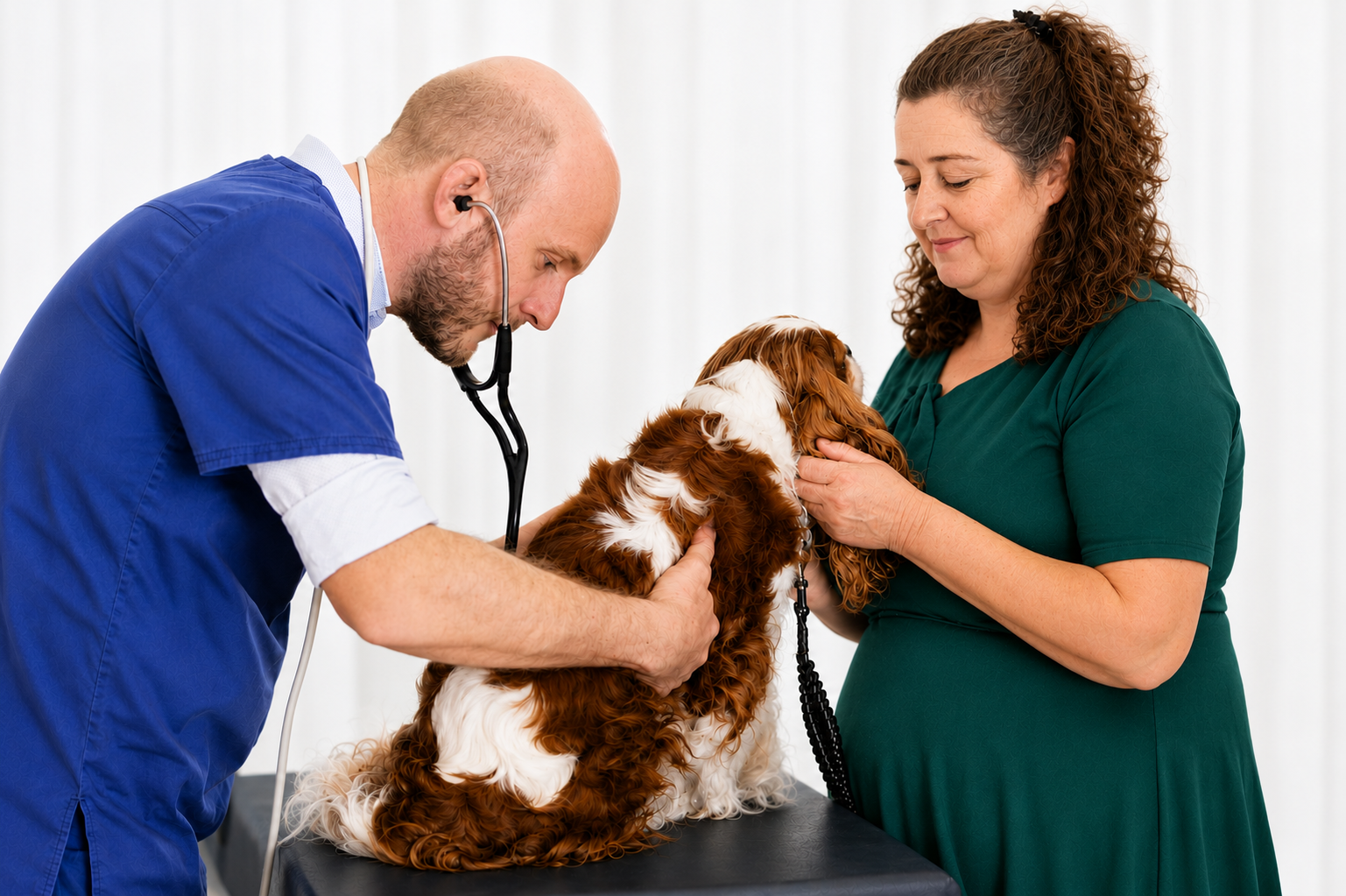
Pictured: Treasure, Blenheim Cavalier King Charles Spaniel being examined.
Photo credit: Carolyn Ryan
Health considerations commonly discussed within the breed include: heart health, eye health, neurological conditions, and joint and mobility health. Education, responsible ownership and ethical breeding are essential in maintaining the future of the breed.
Health & Longevity Project
The Cavalier King Charles Spaniel Club (Qld) is currently working on a health and longevity project with a view to tracking health and longevity of the breed over time. This is a significant undertaking and the project is expected to run over 20-25 years.
The role of the Cavalier King Charles Spaniel Club (Queensland) and the health of Cavaliers.
The Cavalier King Charles Spaniel Club Queensland works towards the following goals:
Educating breeders about health issues affecting the breed and how to minimise the risk of producing affected dogs.
Educating the public about health issues affecting the breed, how to select a puppy and breeder and where to go for support.
Working with specialist Veterinarians to make health testing more affordable and accessible for Queenslanders
Working with Dogs Queensland to hold seminars on health topics relevant to the breed.
Supporting research in areas relevant to cavaliers.
Fundraising to support the above.