

Why Responsible Breeding of Cavalier King Charles Spaniels Matters
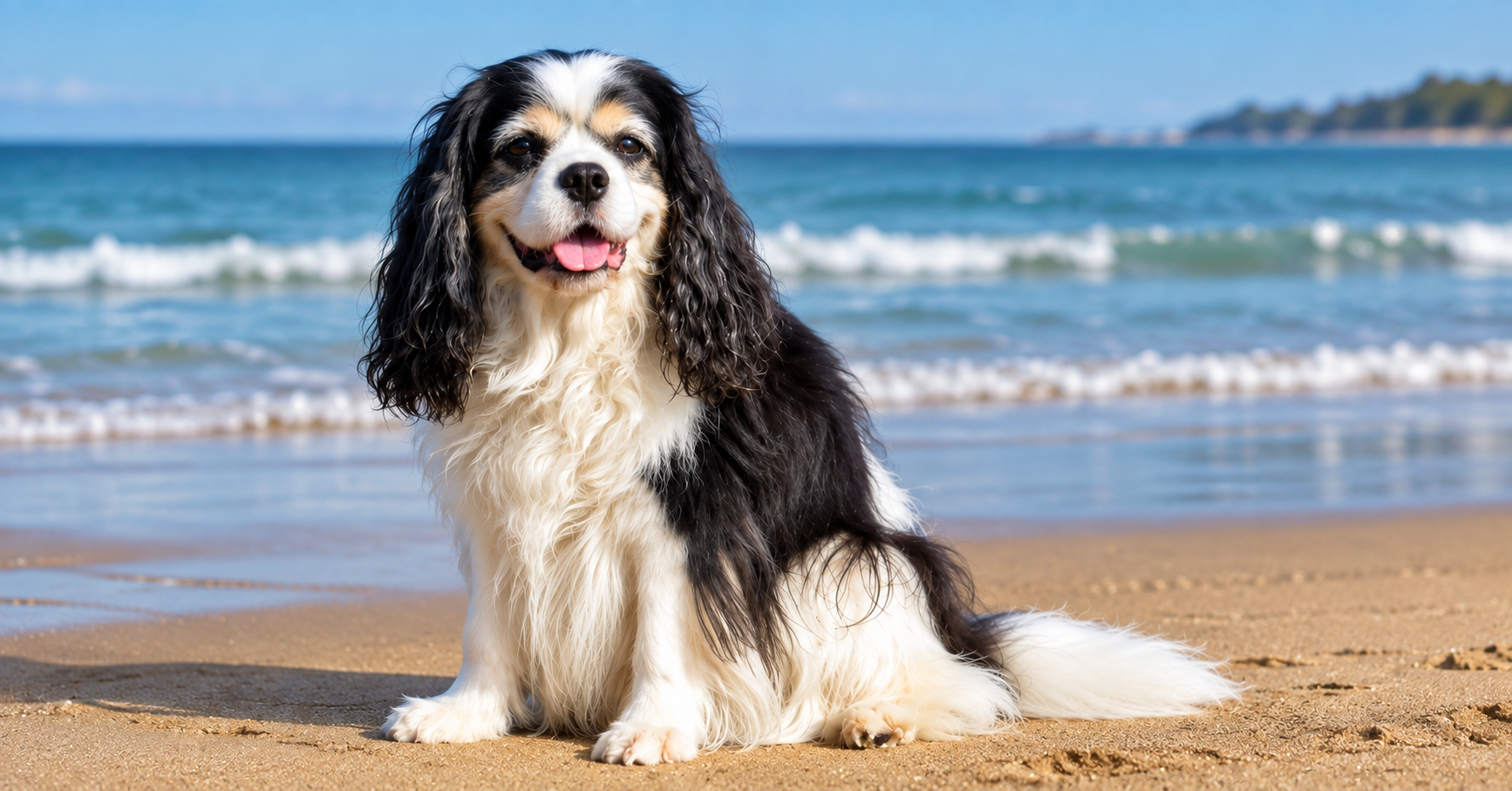
Pictured: Mr Darcy
Photo credit: Bronwen Gordon
Responsible breeding is about much more than producing beautiful Cavalier King Charles Spaniel puppies. It is about protecting the health, temperament, welfare and future of the breed.
Every puppy brought into the world represents a commitment that can last 10, 12, 14 years or more. The decisions made before a mating takes place can influence not only the health and wellbeing of individual puppies, but also the future of the Cavalier King Charles Spaniel as a breed.
For this reason, responsible breeders carefully consider health, genetics, temperament, conformation, pedigree, genetic diversity and the welfare of both the parent dogs and their puppies.
What is responsible Cavalier King Charles Spaniel breeding?
Responsible breeding means making informed decisions with the long-term health and welfare of the breed as a priority. A responsible breeder does not simply breed because two dogs are attractive, successful in the show ring or have desirable pedigrees. Instead, they consider whether the proposed mating is appropriate from a health, temperament, genetic and conformation perspective.
Health testing matters
One of the most important responsibilities of a Cavalier breeder is to understand the inherited health conditions that can affect the breed and to undertake appropriate health screening of breeding dogs.
Dogs Australia currently recommends health testing for Cavalier King Charles Spaniels that includes:
Annual heart examinations, preferably performed by a specialist veterinary cardiologist, for Mitral Valve Disease (MVD)
Eye examinations by a specialist veterinary ophthalmologist
DNA testing for Episodic Falling Syndrome (EFS)
DNA testing for Curly Coat/Dry Eye Syndrome (CC/DE)
MRI screening for Syringomyelia (SM) where scanning is available.
Health testing does not guarantee that a puppy will never develop a health condition. Rather, it provides breeders with valuable information that can help them make more informed breeding decisions and reduce the risk of inherited disease.
Dogs Australia also emphasises that not every health condition has a DNA test available, which is why different forms of screening, including heart, eye, imaging and other veterinary examinations, remain important.
Cavalier King Charles Spaniels and inherited health conditions
The Cavalier King Charles Spaniel is a much-loved breed, but responsible breeders must acknowledge and actively work to address health conditions that can occur within the breed.
These include conditions such as:
Mitral Valve Disease
Mitral Valve Disease, or MVD, is an important health concern in Cavalier King Charles Spaniels. Regular cardiac examinations allow breeders to monitor the heart health of potential breeding dogs.
International breeding schemes recognise the importance of assessing both the presence of a heart murmur and the condition of the mitral valve when making breeding decisions. The Kennel Club's Cavalier-specific heart scheme, for example, provides breeding guidance based on test results and the age of the dog at examination.
Syringomyelia and Chiari-like Malformation
Syringomyelia is a neurological condition involving a fluid-filled cavity within the spinal cord. Chiari-like Malformation is closely associated with the condition in Cavalier King Charles Spaniels.
MRI is currently an important tool for assessing these conditions because there is no simple DNA test that can identify a Cavalier as genetically clear of syringomyelia.
Recent Australian research highlights why this remains an important area of concern. A 2025 study of MRI-screened Australian Cavalier King Charles Spaniels found syringomyelia in 50.5% of the 386 dogs examined, although the study population consisted of dogs undergoing voluntary MRI screening and therefore should not be interpreted as representing every Cavalier in Australia.
This research reinforces the importance of continuing health research and responsible breeding strategies.
Episodic Falling Syndrome
Episodic Falling Syndrome is an inherited neurological disorder associated particularly with the Cavalier King Charles Spaniel.
Fortunately, unlike some complex inherited conditions, a DNA test is available. This gives breeders an opportunity to identify the genetic status of breeding dogs and make informed mating decisions.
Curly Coat and Dry Eye Syndrome
Curly Coat and Dry Eye Syndrome is another inherited condition for which a DNA test is available. Responsible use of DNA testing allows breeders to understand whether their dogs are affected, carriers or clear and to plan matings accordingly.
Dogs Australia reports that DNA testing for conditions such as Curly Coat/Dry Eye Syndrome and Episodic Falling Syndrome has helped breeders work towards reducing these conditions within the breed.
Responsible breeding is about more than health tests
Health testing is essential, but responsible breeding cannot be reduced to a list of certificates.
A breeder should also consider:
Temperament
Physical soundness
Breed type and conformation
Pedigree and family history
Genetic diversity
Age and maturity of the breeding dogs
Previous breeding history
Reproductive health
The health and longevity of relatives
The suitability of the proposed mating
The welfare of the mother and puppies
The ability to provide appropriate care throughout the breeding process
The goal should be to produce puppies that are healthy, well-adjusted, structurally sound and representative of the breed.
Why pedigree matters
A pedigree is much more than a list of impressive names. Studying several generations can help breeders understand family relationships, inherited health concerns, longevity, temperament and the characteristics that may be passed from one generation to the next.
Experienced breeders often know the strengths and weaknesses within their lines and can use this knowledge when selecting a suitable mate. This is particularly important in a breed where some inherited conditions are complex and cannot be identified through a single DNA test.
Read: Understanding Pedigrees
Genetic diversity matters too
Responsible breeders must balance the desire to preserve valuable bloodlines with the need to maintain appropriate genetic diversity. Repeatedly breeding closely related or highly popular dogs can increase the concentration of particular genetic variants within a population.
Responsible breeding therefore requires breeders to look beyond individual dogs and consider the broader genetic health of the breed. This is one reason why breeding decisions should never be based solely on titles, popularity or appearance.
Temperament is part of health and welfare
A Cavalier King Charles Spaniel should not only look like a Cavalier. It should also possess the characteristic temperament for which the breed is loved. The Dogs Australia breed standard describes the Cavalier as sporting, affectionate and absolutely fearless, with a gay, friendly and non-aggressive temperament and no tendency towards nervousness.
Responsible breeders consider temperament when selecting breeding dogs and should aim to produce puppies that can develop into confident, stable and affectionate companions.
Responsible breeding means putting welfare first
The wellbeing of the mother and her puppies must always be more important than producing a litter. Responsible breeders should be prepared for the considerable time, financial commitment and veterinary care that breeding can require.
This includes providing:
Appropriate nutrition
Veterinary care
Health screening
Safe and hygienic facilities
Appropriate socialisation
Early experiences that support confident development
Vaccination and parasite-control programs as advised by veterinarians
Permanent identification as required
Appropriate documentation
Careful placement of puppies in suitable homes
Responsible breeders also remain available to their puppy families after the puppy leaves their care.
Responsible breeders ask questions too
Finding the right home is just as important as producing the right puppy. A responsible breeder should want to know about the prospective owner's lifestyle, experience with dogs, household, expectations and ability to provide lifelong care.
Don't be surprised if a breeder asks you many questions. That is a good sign.
A breeder who is genuinely committed to the welfare of their puppies should care about where those puppies spend the rest of their lives.
Health certificates should be transparent
Prospective puppy owners should feel comfortable asking a breeder about the health testing performed on the parents.
A responsible breeder should be able to explain:
Which tests have been performed
When the tests were undertaken
What the results mean
Which health conditions were tested for
Why particular tests were selected
How the results influenced the proposed breeding
Dogs Australia recommends that prospective buyers ask breeders about the recommended health testing for the breed and says reputable breeders should be willing to discuss their results.
Don't be afraid to ask to see the relevant health certificates.
Responsible breeding does not mean promising a "perfect" puppy
There is no such thing as a completely risk-free dog. Even when responsible breeders undertake extensive health testing and make careful breeding decisions, puppies can still develop health problems.
Genetics can be complex, some conditions do not have definitive screening tests, and environmental factors can also influence health. Responsible breeding is therefore about reducing known risks, making evidence-based decisions and continually learning, rather than making unrealistic promises.
Dogs Australia's guidance similarly notes that buying from a breeder who health tests their dogs does not guarantee that health problems will never occur, but that health testing can significantly reduce risk.
Responsible breeding protects the future of the breed
The Cavalier King Charles Spaniel has a remarkable history and a devoted community of breeders, exhibitors, owners and enthusiasts around the world.
Those who breed Cavaliers today have an important responsibility to the generations that follow. Every breeding decision can contribute to the future of the breed. Responsible breeders are therefore not simply producing puppies. They are stewards of the breed's future.
They work to preserve the Cavalier's distinctive character, beautiful conformation, affectionate temperament and wonderful versatility while continually striving to improve health and welfare.
Choosing a responsible Cavalier breeder
If you are considering purchasing a Cavalier King Charles Spaniel puppy, take your time. Research the breed. Research breeders. Ask questions. Look at health-testing results. Learn about the parents and their relatives. Visit the breeder where possible and observe how the dogs are cared for.
Consider choosing a breeder who:
Is registered with the relevant Dogs Australia state or territory body
Follows an appropriate code of ethics
Undertakes recommended health testing
Is transparent about health results
Can discuss the health history of their breeding lines
Prioritises temperament and soundness
Raises puppies with appropriate care and socialisation
Carefully selects homes for their puppies
Provides ongoing support to puppy owners
Check out our Breeder Directory
The future of the Cavalier is in our hands
The Cavalier King Charles Spaniel is a treasured breed, and responsible breeding is essential to protecting its future. Healthy breeding is not about producing the most puppies. It is about making thoughtful decisions that give every puppy the best possible start in life while protecting the health and welfare of the breed for generations to come.
For anyone who loves Cavalier King Charles Spaniels, that is a responsibility worth taking seriously.