

Rest and Sleep
Rest & Sleep: How Much Sleep Does a Cavalier Need?
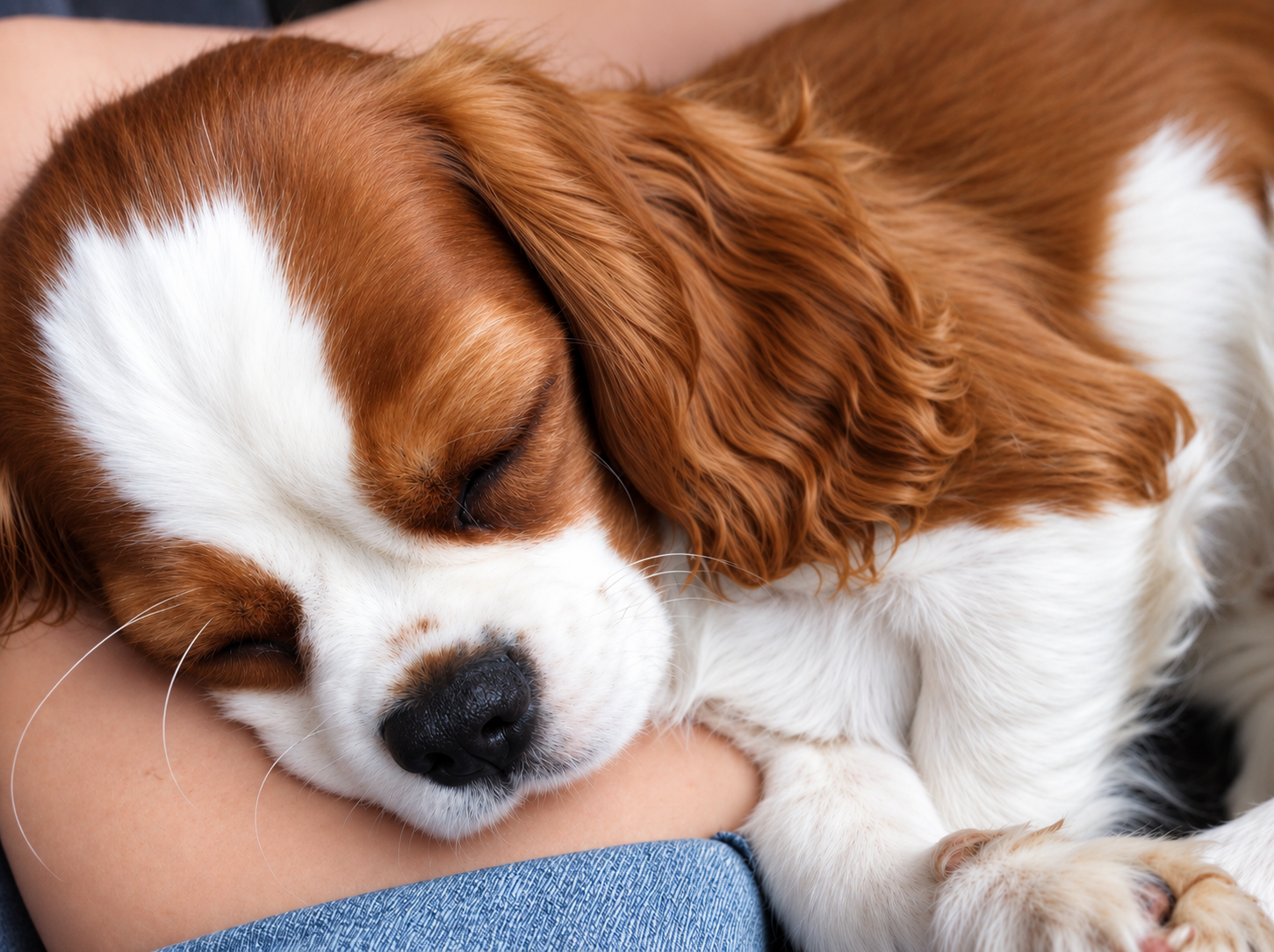
Photo credit: Cavalier King Charles Spaniel Club (Queensland)
Rest and sleep are essential parts of a healthy, happy life for every dog. While it can sometimes seem as though our dogs spend much of the day sleeping, regular periods of sleep and quiet rest are important for physical recovery, brain function, emotional wellbeing and overall health.
For Cavalier King Charles Spaniels, providing a comfortable and peaceful place to rest is particularly important.
Cavaliers are affectionate, people-oriented companion dogs who often enjoy being close to their families, but they also need opportunities to withdraw from activity and enjoy uninterrupted sleep.
There is no single number of hours that is right for every dog. Sleep requirements vary according to age, activity level, health, lifestyle and individual temperament.
As a general guide:
Puppies may sleep for approximately 18–20 hours a day. Sleep is particularly important during puppyhood because the body and brain are undergoing rapid development.
Adult dogs commonly sleep or rest for approximately 12–16 hours over a 24-hour period.
Senior dogs often require additional sleep and quiet rest as their bodies become less active and recovery from physical activity can take longer.
Dogs that are particularly active, recovering from illness or surgery, or experiencing changes in their health may also need additional rest.
It is important to remember that dogs do not necessarily sleep for one long period. Their daily sleep is usually divided between overnight sleep and several daytime naps.
Sleep is more than simply “switching off”
Sleep allows a dog's body and brain to recover from the activities and experiences of the day. Puppies, in particular, need substantial amounts of sleep to support healthy physical and neurological development.
Adult dogs also benefit from regular opportunities to sleep and relax. A dog that has plenty of exercise, training, play and mental stimulation still needs adequate downtime afterwards.
Rest is therefore an important part of a balanced daily routine.
A healthy routine might include:
exercise and physical activity
play and enrichment
training and mental stimulation
meals and regular toilet breaks
social interaction and companionship
uninterrupted periods of sleep and quiet rest
Dogs thrive on predictable routines, and incorporating regular rest periods into the day can help them understand when it is time to be active and when it is time to settle.
Puppies need plenty of sleep
It is easy to underestimate how much sleep a puppy needs. Puppies are constantly learning. Everything from meeting new people and animals to exploring their surroundings, learning household rules and experiencing new sights, sounds and smells requires energy and processing.
Puppies commonly sleep for 18–20 hours a day, often in a series of naps rather than one continuous period. A puppy that becomes overtired may not necessarily appear sleepy. Instead, they may become excitable, mouthy, restless or difficult to settle. Providing regular opportunities for your puppy to sleep in a quiet, comfortable environment can help prevent them from becoming overtired.
Young puppies may also need to wake during the night to toilet. As they mature and develop better bladder control, their ability to sleep through the night generally improves.
Adult Cavaliers need rest too
Cavaliers are often enthusiastic little dogs who enjoy being involved in everything their family is doing. Their affectionate nature can mean they are reluctant to miss out on whatever is happening around them. However, being awake does not mean they need to be constantly active.
An adult Cavalier may happily spend part of the day sleeping, followed by periods of quiet relaxation, watching what is happening around them or simply lying beside their family. Most adult dogs sleep for a substantial portion of the day, with individual requirements varying considerably.
Allow your Cavalier to sleep when they choose to do so, particularly after exercise, training, social activities or periods of excitement.
Senior Cavaliers may need more rest
As dogs age, it is normal for them to slow down and spend more time sleeping or resting.
Senior Cavaliers may need longer periods of uninterrupted rest and may appreciate a bed that provides additional support and cushioning. Their resting area should also be easy to access, particularly if they are experiencing stiffness, arthritis or reduced mobility.
Avoid expecting an older dog to maintain the same exercise and activity levels they enjoyed when they were younger. Instead, provide appropriate opportunities for movement while allowing plenty of time for recovery and rest.
A significant change in sleeping habits, however, should not automatically be attributed to old age. Increased sleeping, difficulty settling, nighttime restlessness or changes in the sleep–wake cycle can sometimes be associated with pain, illness or age-related cognitive changes.
Creating a comfortable sleeping environment
Every dog should have access to a safe, comfortable place where they can sleep without being disturbed.
Consider providing:
A comfortable bed
Choose a bed that is appropriate for your dog's size, age and individual needs. Older dogs or dogs with joint problems may benefit from supportive cushioning and a bed that is easy to get into and out of.
A quiet place
Your dog's sleeping area should be somewhere they can retreat to when they want peace and quiet. It does not necessarily need to be isolated from the family, but it should provide protection from excessive noise, foot traffic and interruptions.
A comfortable temperature
Dogs need to be able to regulate their body temperature while sleeping. Ensure their sleeping area is appropriately warm in winter and cool in summer, with access to fresh water. During Queensland's warmer months, particular care should be taken to prevent dogs from becoming overheated while resting.
Uninterrupted sleep
Teach children and other household members that a sleeping dog should be left alone. Even the most affectionate Cavalier needs time when they are not being touched, played with or disturbed. A dog that chooses to retreat to their bed should be allowed to do so.
Should I wake my dog?
Generally, there is no reason to wake a healthy sleeping dog simply because they have been asleep for a while. If your dog is sleeping comfortably, breathing normally and following their usual routine, allowing them to rest is usually appropriate.
Puppies, senior dogs and dogs recovering from illness or surgery may need particularly substantial amounts of sleep. However, a sudden or significant change in how much your dog sleeps should be taken seriously.
When should you be concerned about your dog's sleep?
Changes in sleeping behaviour can sometimes be an early indication that something is wrong.
Speak with your veterinarian if you notice a persistent or significant change such as:
sleeping considerably more or less than usual
difficulty settling or appearing unable to get comfortable
frequent waking during the night
pacing or restlessness at night
suddenly sleeping during the day and being awake at night
unusual vocalisation while resting
changes in appetite or toileting
reluctance to exercise or participate in normal activities
difficulty getting up or lying down
excessive panting while resting
coughing or breathing difficulties
repeated episodes of waking suddenly or appearing distressed
changes in behaviour or interaction with family members
Excessive tiredness or lethargy can sometimes indicate an underlying medical problem, while nighttime restlessness can also be associated with pain, illness or age-related cognitive changes.
If your dog's normal sleeping pattern changes, it is better to discuss the change with your veterinarian rather than assuming it is simply part of getting older.
Rest and the Cavalier King Charles Spaniel
Cavalier King Charles Spaniels deserve particular attention when changes in rest or sleep are observed because the breed can be affected by a number of health conditions that may influence comfort, activity and sleep.
For example, mitral valve disease is an important health concern in Cavaliers. Dogs with more advanced cardiac disease may develop exercise intolerance, nighttime restlessness or breathing difficulties.
Cavaliers can also be affected by Chiari-like malformation and syringomyelia, neurological conditions that may cause pain or discomfort. Research has identified an association between chronic pain related to these conditions and abnormal sleep patterns in affected Cavaliers.
This does not mean that a Cavalier who sleeps more or occasionally has an unsettled night necessarily has a serious health problem. Dogs have individual sleep patterns, and many completely healthy Cavaliers are enthusiastic nappers.
The important consideration is change.
If your Cavalier's sleeping, resting, breathing, mobility or activity pattern changes noticeably, speak with your veterinarian.
Let sleeping Cavaliers lie
A good night's sleep and plenty of daytime rest are fundamental to canine wellbeing.
Rather than viewing sleep as inactivity, think of it as an essential part of your Cavalier's daily health routine. A balanced day should provide opportunities for exercise, enrichment, companionship and exploration, followed by plenty of time to relax and recharge.
Whether your Cavalier is a lively puppy, an energetic adult or a much-loved senior, providing a comfortable place to rest and respecting their need for uninterrupted sleep is one of the simplest ways you can support their wellbeing.
And sometimes, the best thing you can do for your Cavalier is simply let them sleep.
In Conclusion…
Dogs require considerably more sleep than humans.
Adult dogs commonly sleep or rest for approximately 12–16 hours a day.
Puppies may need around 18–20 hours of sleep each day.
Senior dogs often require additional rest.
Dogs benefit from a predictable daily routine that includes exercise, enrichment and quiet periods.
Every dog should have access to a comfortable, safe place to sleep.
Sleeping dogs should generally be left undisturbed.
A significant change in sleeping or resting behaviour can sometimes indicate pain or illness.
Cavalier King Charles Spaniels can experience health conditions that may affect comfort, activity and sleep.
If your Cavalier's normal sleeping pattern changes, seek advice from your veterinarian.
References
American Kennel Club. (2020). Why do dogs sleep so much? American Kennel Club.
American Kennel Club. (2024). How much do puppies sleep? American Kennel Club.
American Kennel Club. (2025). Common health concerns in senior dogs. American Kennel Club.
American Kennel Club. (2026). Why your dog needs a routine at every stage of life. American Kennel Club.
PetMD Editorial. (2026). Why do dogs sleep so much? PetMD.
Sherman, A. R., Quigley, M. A., Werre, S. R., Rossmeisl, J. H., & Parker, R. L. (2025). Relationship between sleep and pain in Cavalier King Charles Spaniels. Veterinary Record.
VCA Animal Hospitals. (2024). Should my dog sleep in my bed? VCA Animal Hospitals.
VCA Animal Hospitals. (2026). How much sleep do puppies need? VCA Animal Hospitals.
VCA Animal Hospitals. (2026). How to recognize pain in aging dogs. VCA Animal Hospitals.
Disclaimer
This article is provided by the Cavalier King Charles Spaniel Club (Queensland) for general educational purposes. It is not a substitute for individual veterinary advice, diagnosis or treatment.