

Influential Cavalier King Charles Spaniels Throughout History
The Cavaliers Who Helped Shape the Breed
The Cavalier King Charles Spaniel we know and love today is the result of generations of dedicated breeders, influential dogs and carefully preserved bloodlines. Behind today's Cavaliers are remarkable dogs whose type, temperament, pedigree and breeding influence helped establish and shape the breed.
The Cavalier King Charles Spaniel Club (Queensland) presents this collection of influential Cavaliers to celebrate their place in the breed's history and to help today's owners, breeders, exhibitors and enthusiasts understand the dogs behind the pedigrees. From the early dogs that helped establish the Cavalier in the 1920s and 1930s to influential champions and stud dogs of later generations, each dog tells part of the story of how the breed developed.
This page is a continual work in progress as more research continues to be done around the world. We recommend coming back to this page regularly to keep up to date.
Why Are These Cavaliers Important?
A champion title alone does not necessarily make a dog influential. A truly influential Cavalier may have contributed to the breed through exceptional conformation, longevity, temperament, successful progeny, important pedigrees or the ability to pass desirable characteristics through generations.
Some dogs became influential sires or dams, producing champions and breeding stock that continued their lines. Others were important because they represented the type breeders were striving to establish during the formative years of the breed. Some became important historical reference points, while others appear repeatedly throughout modern pedigrees. Understanding these dogs helps us look beyond an individual pedigree and appreciate the generations of breeding decisions that have shaped the Cavalier King Charles Spaniel.
The Foundation of the Modern Cavalier
The story of the modern Cavalier began with a desire to recreate the longer-nosed Toy Spaniel depicted in historical paintings.
In 1926, American enthusiast Roswell Eldridge offered a prize at Crufts for the best examples of the "old type" Toy Spaniel. His challenge encouraged breeders to search for and preserve dogs resembling the longer-faced spaniels seen in earlier artwork.
At Crufts in 1928, Ann's Son, owned by Miss Mostyn Walker, became an especially important dog. He won Best of Breed and was subsequently used as the living example around which the emerging breed standard was developed. The newly formed breed club used Ann's Son, together with historical paintings, as a reference for the Cavalier type they were seeking to establish.
From these early beginnings came a small group of dogs whose pedigrees became foundational to the breed.
Celebrating the Past.
Understanding the Present.
Protecting the Future.
Every Cavalier has a story.
Some stories are written in championship records. Others are found in old photographs, pedigrees, breeding records and the memories of the people who knew these remarkable dogs.
Together, these stories form the history of the Cavalier King Charles Spaniel.
Explore the influential Cavaliers who helped shape our beloved breed below.
Ann's Son
One of the most important dogs in Cavalier history
Ann's Son holds a unique place in Cavalier history.
He was owned by Miss Mostyn Walker and became a central figure in the breed's revival during the late 1920s. At the first meeting of the newly formed Cavalier club in 1928, Ann's Son was placed on the table as a living example while members studied historical paintings of the old-style Toy Spaniels. The emerging breed standard was based substantially on this combination of historical artwork and the living dog.
Ann's Son also won Best of Breed at Crufts in 1928 and repeated the achievement in subsequent years.
His importance extends far beyond his show record. His descendants became part of the foundation from which the modern Cavalier developed.
Key legacy:
Important early breed type
Reference dog for the 1928 breed standard
Significant sire in early pedigrees
Ancestor of later influential Cavaliers
Health information: Historical health records for Ann's Son are limited by the era in which he lived. Modern cardiac, eye, DNA and MRI screening were not available in the form used by responsible breeders today.
Wizbang Timothy
A brother to Ann's Son
Wizbang Timothy was the litter brother of Ann's Son and is another important name in the earliest history of the Cavalier.
Like Ann's Son, he represented the longer-faced type that breeders were seeking to restore. Early Cavalier histories identify both dogs among the foundational animals from which the breed developed.
Although Ann's Son became the more prominent historical reference, Wizbang Timothy remains an important part of the story of the breed's beginnings.
Carlo of Ttiweh
An important early foundation sire
Carlo of Ttiweh was one of the influential early dogs used during the establishment of the Cavalier.
The Ttiweh kennel of Mrs Amice Pitt played an enormous role in the revival and development of the breed. The Ttiweh name appears throughout early Cavalier pedigrees, reflecting the importance of Pitt's breeding programme.
Carlo of Ttiweh is identified among the key foundation dogs of the reconstructed Cavalier breed.
Duce of Braemore
Another important foundation dog
Duce of Braemore was another early influential sire.
Together with dogs such as Carlo of Ttiweh and Kobba of Kuranda, he formed part of the small genetic foundation from which the emerging Cavalier breed was developed.
The early breeders were working with a remarkably small population. Consequently, the influence of individual dogs could extend through generations of subsequent pedigrees.
Kobba of Kuranda
An important early Black & Tan
Kobba of Kuranda occupies a particularly interesting place in early Cavalier history as one of the first influential Black and Tan dogs.
Historical accounts identify Kobba among the foundation dogs of the breed and note his importance in producing the desired head characteristics.
His inclusion in early pedigrees also demonstrates how the four recognised Cavalier colours became part of the developing breed.
Aristide of Ttiweh
A significant Ttiweh influence
Aristide of Ttiweh was another important early Cavalier.
His influence can be seen through his daughter Linooga, who was the dam of Belinda of Saxham. Belinda went on to win Best in Show and the Bitch Challenge Certificate at the first Cavalier King Charles Spaniel Club Championship Show in 1946.
Aristide's presence in Belinda's pedigree demonstrates how influential early bloodlines were carried forward through subsequent generations.
Ch. Daywell Roger
The first English Cavalier champion
Few dogs occupy a more important place in Cavalier history than Ch. Daywell Roger.
Born in 1945, Daywell Roger was acquired by Amice Pitt from the Daywell kennel and subsequently owned and successfully exhibited by her daughter, Jane Bowdler. He won his first Challenge Certificate at the first Cavalier Championship Show in August 1946 and went on to become the first English Champion Cavalier King Charles Spaniel.
His influence did not end with his championship.
Daywell Roger became a highly influential stud dog and sired 11 champions—seven dogs and four bitches. His descendants made a significant contribution to the development of the breed during the middle of the twentieth century.
For breeders studying Cavalier pedigrees, Daywell Roger is therefore an especially important historical name.
Key legacy:
First English Cavalier Champion
Significant stud dog
Sired 11 champions
Major influence on mid-century Cavalier pedigrees
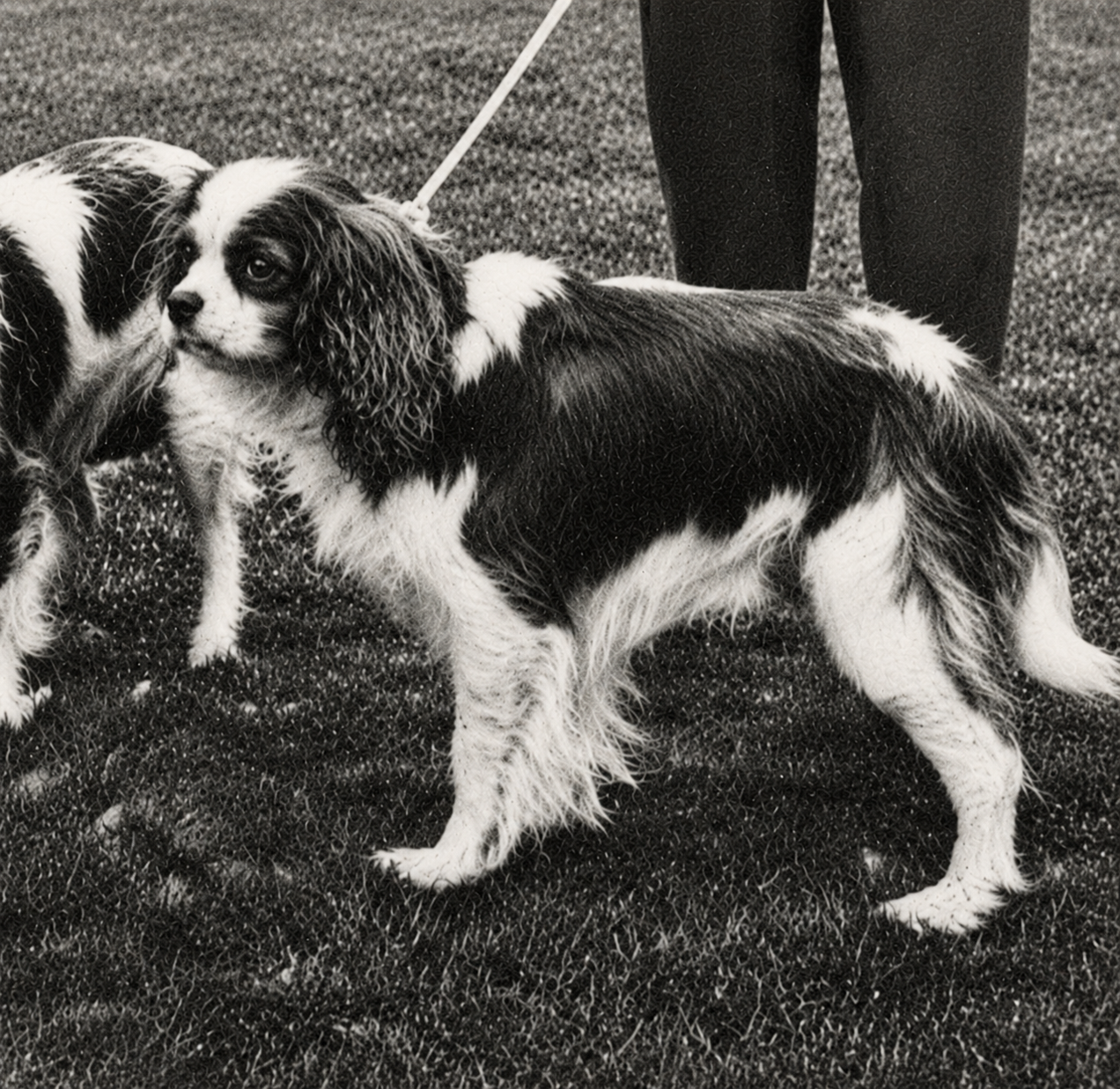
Pictured: Ch. Daywell Roger.
Photo credit: Historical image, original source unknown.
Belinda of Saxham
A landmark bitch of the early show ring
Belinda of Saxham made history at the first Cavalier Championship Show on 29 August 1946, where she was awarded Best in Show and the Bitch Challenge Certificate. She was owned by Mrs Katie Eldred and was sired by Aristide of Ttiweh.
Belinda is an important example of the contribution made by influential bitches to the development of the breed.
Her historical significance is particularly valuable when considering the development of female lines, rather than focusing exclusively on prominent stud dogs.
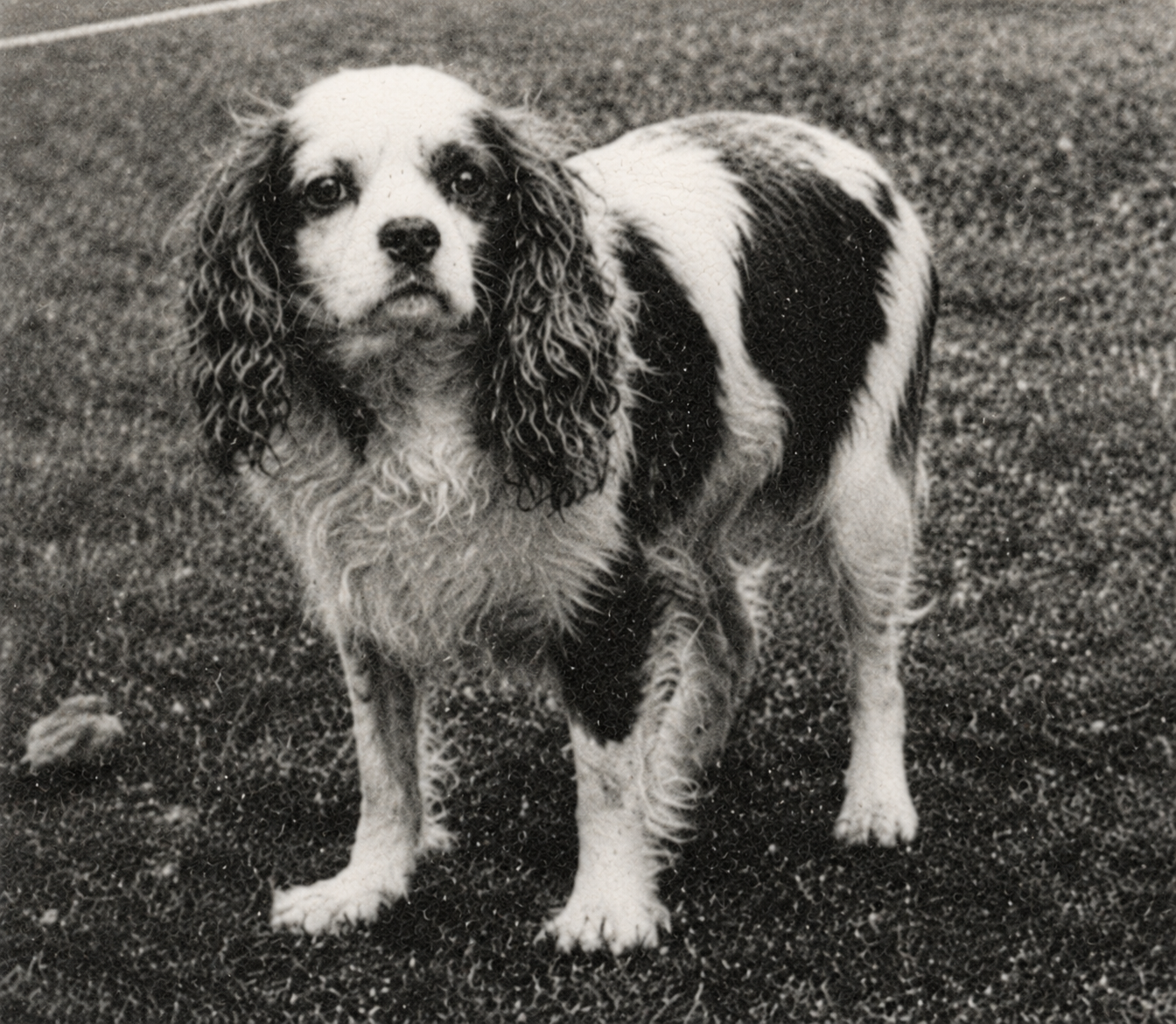
Pictured above: Ch. Belinda of Sachem.
Photo credit: Historical image, original source unknown.
Little Dorrit of Ttiweh
An influential early bitch
Ch. Little Dorrit of Ttiweh was another important bitch of the breed's early development.
Her connection to Belinda of Saxham demonstrates how influential breeding lines could extend from one generation into the next. Historical accounts identify Little Dorrit as a key bitch of her era.
Harmony of Ttiweh
An early Best in Show winner
Ch. Harmony of Ttiweh became the first recorded Best in Show winner at a non-Club show in January 1951.
Her achievement provides an important snapshot of the breed's growing recognition during the early post-war years.
The period following the Second World War was critical for the Cavalier. Breeding numbers had been dramatically reduced during the war, making the preservation and rebuilding of breeding lines particularly important.
Influential Cavaliers Gallery
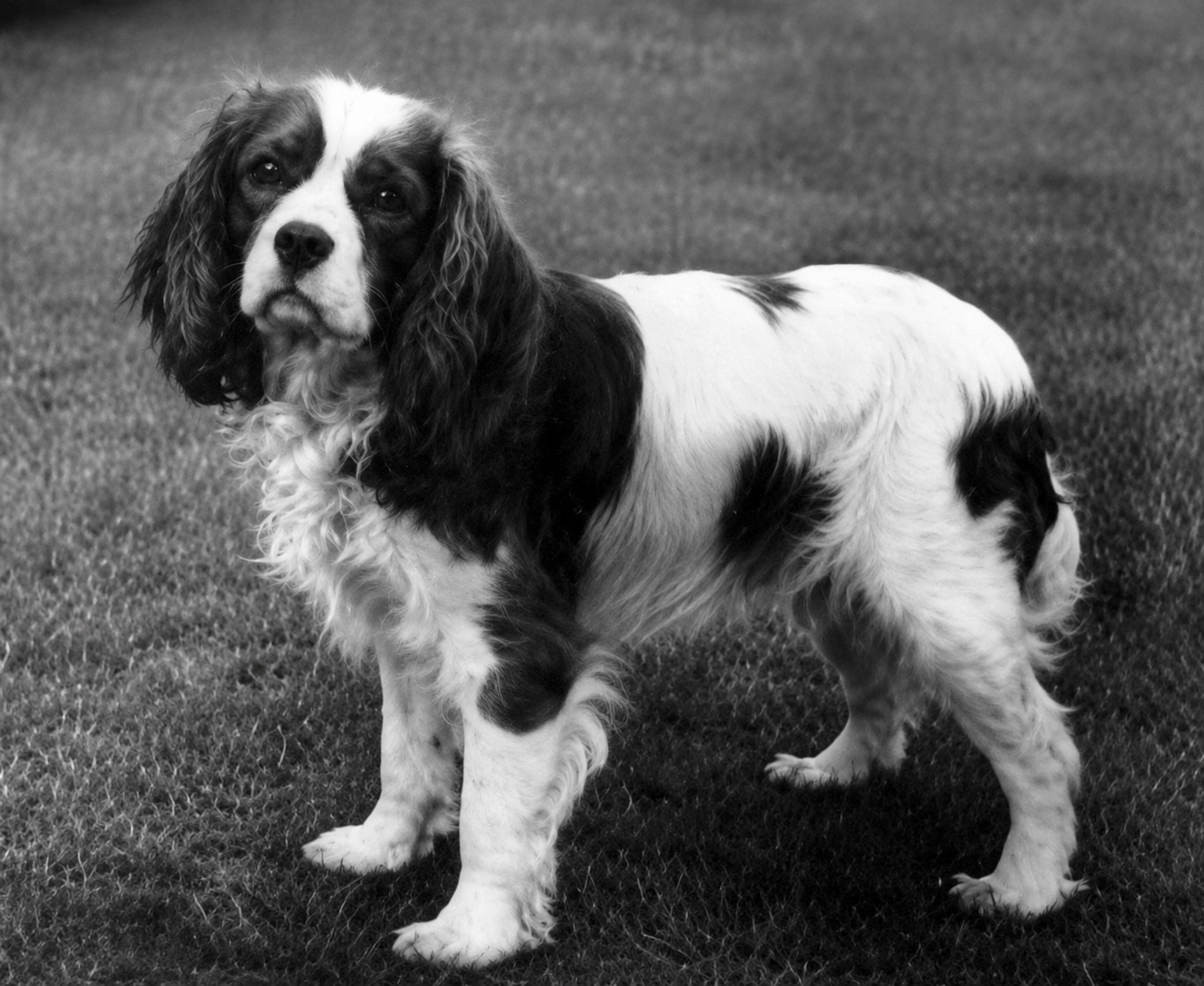
Ch. Rosemullion of Ottermouth
Born: 1967
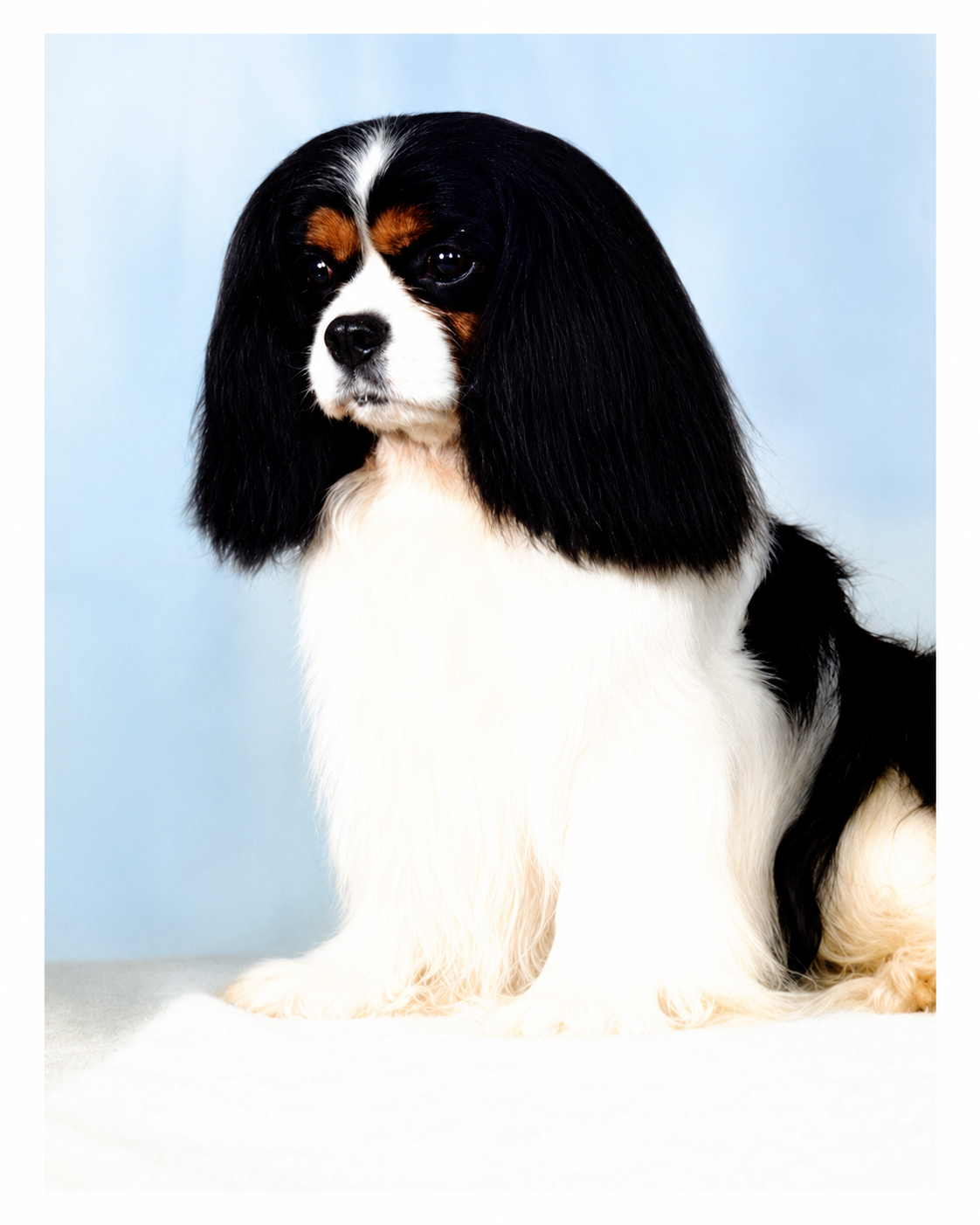
Ch. Werrington Buoyancy
Born: 1987
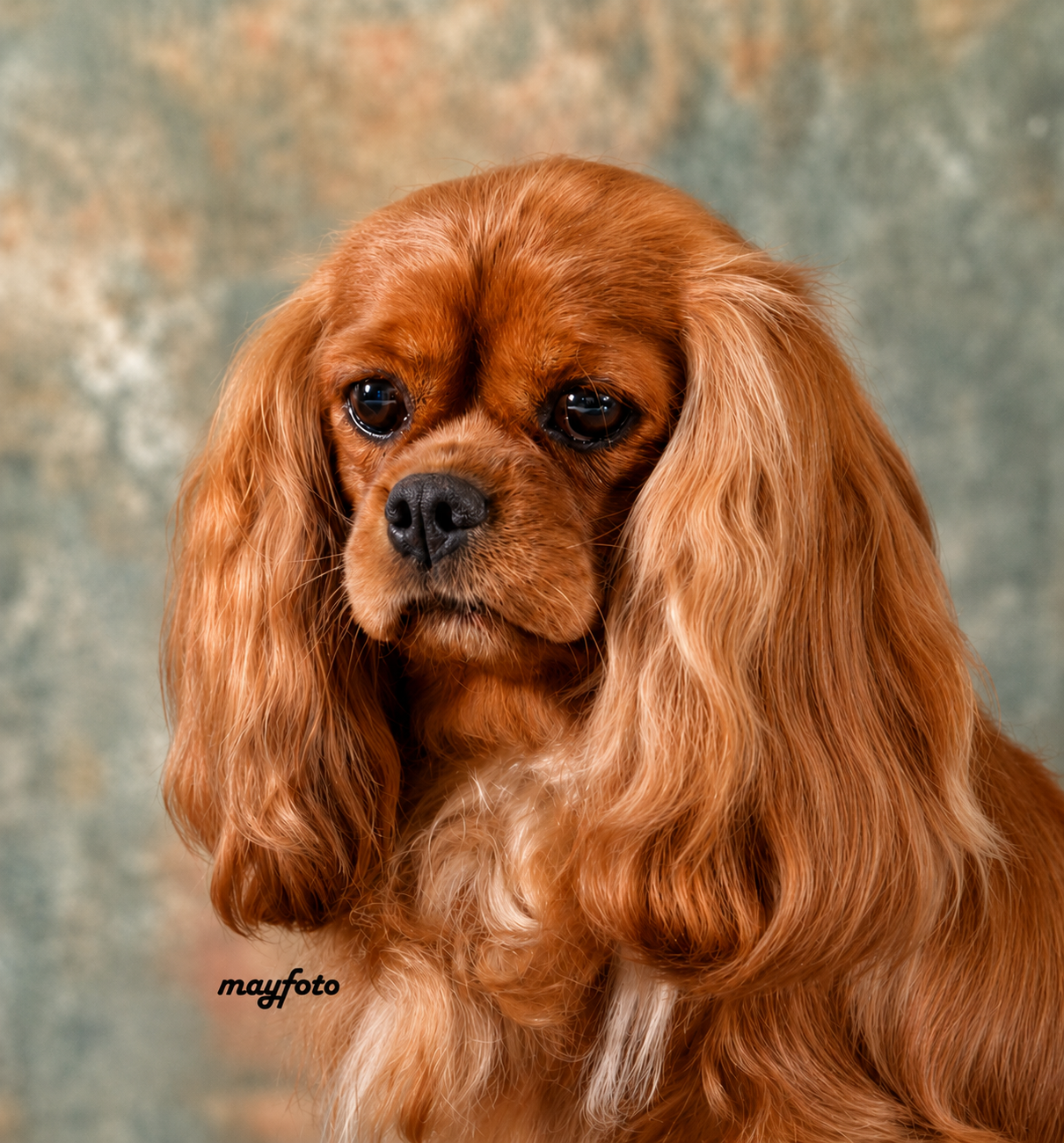
Homerbrent Puppetina
Born:
The Importance of Bloodlines
A Cavalier's influence cannot always be understood by looking at one generation.
A dog may appear several times in a pedigree, sometimes many generations back, because its descendants were repeatedly incorporated into breeding programmes. Over time, these dogs can have a profound influence on the genetic makeup and characteristics of the breed. This is why historical pedigrees are so valuable.
When studying an influential Cavalier, we can consider:
Pedigree
Who were the dog's parents, grandparents and more distant ancestors?
Progeny
Which notable Cavaliers did the dog produce?
Champions
Did its offspring or descendants achieve championship status?
Longevity
How long did the dog live, where reliable records exist?
Health
What health information is documented?
DNA and genetic testing
Is modern genetic information available for the dog or its descendants?
Breed type
What characteristics did the dog contribute to subsequent generations?
Line influence
How frequently does the dog appear in later pedigrees?
Health, Longevity and DNA:
What Can Historical Records Tell Us?
One of the most fascinating aspects of studying historical Cavaliers is comparing the information available to breeders today with what was known several generations ago.
Today's responsible breeders have access to sophisticated health screening, including cardiac examinations, DNA testing, ophthalmic examinations and MRI screening for Chiari-like Malformation and Syringomyelia.
For many of the influential Cavaliers featured on this page, such testing did not exist during their lifetime. That means the absence of a documented health condition should not automatically be interpreted as evidence that the dog was free from that condition.
Where reliable information exists, we will record it. Where information cannot be verified, we will say so. This distinction is particularly important when studying historical pedigrees.
What Can These Dogs Teach Today's Breeders?
The study of influential Cavaliers is not simply an exercise in nostalgia. Pedigree history can help us understand how the breed developed, how particular lines spread internationally and how individual dogs contributed to subsequent generations.
However, historical influence should not be confused with a recommendation for breeding. A dog that was highly influential many decades ago may appear repeatedly in modern pedigrees, but today's breeders must consider the health, temperament, genetic diversity and overall welfare of the dogs being bred today.
Modern breeding decisions should be informed by current evidence and contemporary health testing, not simply by the presence of a famous name in a pedigree.
References
Booth, E. M. (1967). All about the Cavalier King Charles Spaniel. [Publisher information varies by edition].
Cavalier King Charles Spaniel Club. (n.d.). General history.
Cavalier King Charles Spaniel Club. (n.d.). The origin and founding of the breed.
Cavalier King Charles Spaniel Club. (n.d.). Cavaliers as companions.
Companion Cavalier Club. (n.d.). The origin of Toy Spaniels.
Evans, J. (1996). Cavalier King Charles Spaniels: An owner’s companion. The Crowood Press.
Field, B. (1996). The Cavalier King Charles Spaniel (Rev. ed.). Robert Hale.
Homes, T., & Homes, D. (n.d.). Cavalier King Charles Spaniels: The origin & founding of the breed.