

Drying
Drying Your Cavalier King Charles Spaniel
Drying is an often-overlooked part of bathing, but for a Cavalier King Charles Spaniel, it is just as important as washing the coat. A Cavalier has a long, silky coat with plenty of feathering, particularly around the ears, legs, feet and tail. That beautiful coat can hold a considerable amount of water, making thorough and careful drying an essential part of good grooming.
Correct drying helps keep your Cavalier comfortable, reduces the opportunity for tangles to develop and allows you to inspect the skin and coat after bathing. It is also an important opportunity to teach your dog that grooming is a calm and positive experience.
Why Is Drying Your Cavalier Important?
Leaving a Cavalier's coat damp for an extended period is not good grooming practice. A wet coat can become tangled more easily, particularly where the hair is long and feathered. Drying also gives you an opportunity to check areas that may otherwise be hidden beneath the coat.
Regular grooming has several health and welfare benefits, including removing debris, preventing mats and allowing owners to become familiar with their dog's normal skin and coat.
Drying is therefore not simply about making your Cavalier look fluffy after a bath. It is part of maintaining a clean, comfortable and well-maintained coat.
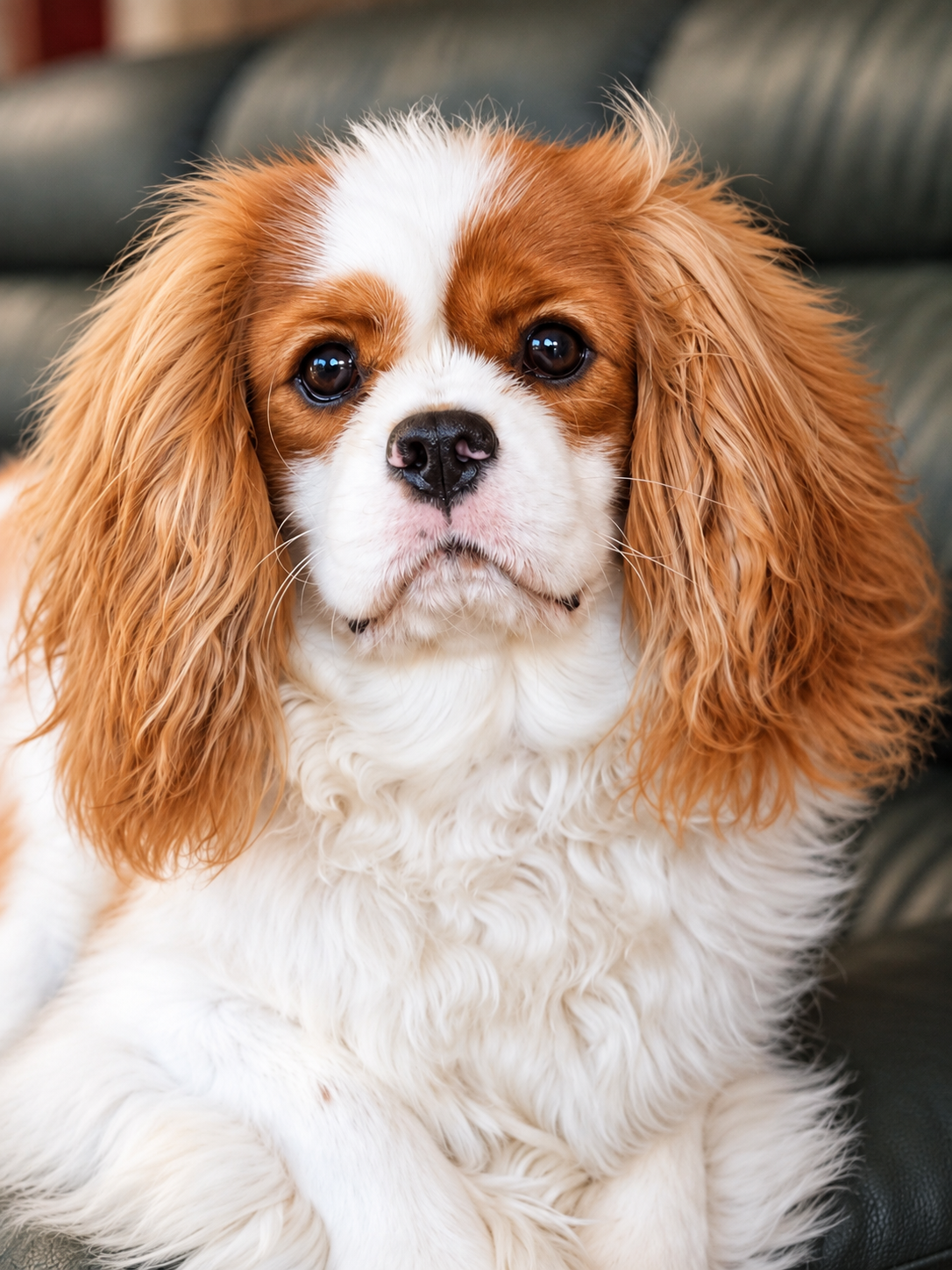
Pictured: Arthur after a blow dry.
Photo credit: Linda Hendry
A Cavalier's Coat Requires Careful Drying
The Dogs Australia breed standard describes the Cavalier King Charles Spaniel's coat as:
Long
Silky
Free from curl
Permitting a slight wave
With plenty of feathering
The ears, feet and tail are also specifically described as being feathered. This means there can be considerably more hair to dry than may initially appear.
Pay particular attention to:
Behind and underneath the ears
The chest
Front legs
Armpits
Rear legs
Feet
Between the toes
Tail
Under the body
Around the collar or harness area
These are also areas where tangles can develop.
How to Dry a Cavalier King Charles Spaniel
The ideal approach is:
Towel dry → gently separate the coat → dry thoroughly → brush and inspect.
The process should be calm and unhurried.
Step 1: Remove Excess Water
Once the bath is finished, allow your Cavalier to have a gentle shake if they wish.
Be prepared, the classic post-bath shake can send water everywhere!
Then use a clean, absorbent towel. Don't vigorously rub the coat. Instead, gently press, blot and squeeze the water from the coat.
Aggressive rubbing can encourage tangling, particularly in the longer feathering.
Step 2: Pay Attention to the Feathering
Use the towel carefully around the longer areas of the coat.
Gently squeeze water from:
Ear feathering
Chest feathering
Leg feathering
Tail feathering
Feet
Don't twist or wring the hair. The aim is to remove as much excess moisture as possible without creating unnecessary tangles.
Step 3: Use a Suitable Dog Dryer
A pet dryer can make drying a long-coated Cavalier considerably easier. However, the dryer should be introduced gradually and used appropriately. If your Cavalier is unfamiliar with a dryer, don't immediately turn it on beside their face.
Instead, allow them to become accustomed to:
Seeing the dryer.
Hearing the dryer from a distance.
Feeling the airflow from a safe distance.
Gradually having the dryer moved closer.
Being dried for increasingly longer periods.
VCA recommends introducing a puppy to an electric dryer gradually, initially using a low or cool setting and keeping the airflow away from the dog's face.
Reward calm behaviour throughout the process.
Never Use Excessive Heat
One of the most important rules of dog drying is: Warm is not the same as hot. Dogs can become uncomfortable or overheated when exposed to excessive heat.
When using a dryer:
Use an appropriate temperature.
Keep the airflow moving.
Avoid concentrating hot air on one area.
Regularly check the temperature.
Take extra care around thinly coated areas.
Keep the dryer away from the face.
Stop if your dog becomes distressed.
A high-powered dryer does not mean you should use maximum heat or maximum intensity. The objective is safe, comfortable and thorough drying.
Be Particularly Careful Around the Face
The face requires special care.
Avoid directing strong airflow directly into your Cavalier's:
Eyes
Nose
Mouth
Ears
Instead, dry the surrounding areas gently and use a towel where appropriate. If your dog becomes uncomfortable with the dryer around the head, don't force it. A towel and a slower drying process may be preferable.
What About the Ears?
Cavalier ears are long and heavily feathered, making them one of the areas requiring particular attention after bathing. Gently towel dry the outer ear and surrounding feathering. However, avoid forcing water or air into the ear canal. Don't insert cotton buds into the ear canal.
If your Cavalier has recurring ear problems, excessive scratching, head shaking, unpleasant odour or discharge, consult your veterinarian rather than attempting to solve the problem through more frequent bathing or drying.
Dry the Feet Thoroughly
The feet are another area that can easily be overlooked.
After bathing, gently dry:
The top of the feet
Between the toes
Around the pads
The feathering around the feet
Check for:
Grass seeds
Small stones
Mud
Knots
Redness
Irritation
Foreign material
Because Cavaliers have feathered feet, these areas can retain moisture and collect debris.
Drying the Tail
A Cavalier's tail is well feathered and can hold more water than you might expect.
Gently squeeze excess water from the tail with a towel rather than rubbing it vigorously.
When using a dryer, work through the feathering methodically.
Once dry, gently comb through the tail to separate the hair and identify any developing tangles.
Brush While Drying?
This depends on the equipment and technique being used. For a Cavalier, it can be useful to gently separate and brush sections of the coat as they dry, particularly where the hair is prone to tangling. However, brushing should never involve forcefully pulling through wet or tangled hair.
A sensible approach is:
Towel → gentle drying → careful separation of coat → thorough drying → final brush and comb.
The RSPCA recommends regular brushing to prevent knots and mats and advises using appropriate grooming tools and gentle handling.
Your Cavalier Should Be Completely Dry
Don't stop when the outer coat feels dry. A long Cavalier coat can remain damp underneath.
Check particularly:
Behind the ears
Under the ears
Chest
Armpits
Between the legs
Feet
Tail
Under the body
Around the collar area
Use your fingers to gently separate sections of the coat and check for remaining moisture.
A Cavalier should be comfortably dry before being left to settle.
Drying and Tangles
One of the biggest reasons drying matters for Cavaliers is their feathering. Wet hair can cling together, and existing knots can become more difficult to manage.
That's why the complete process should ideally be:
Before the bath
Brush and remove tangles.
During the bath
Wash gently and rinse thoroughly.
Immediately afterwards
Towel dry carefully.
During drying
Separate and dry the coat methodically.
When dry
Brush and comb again.
This approach makes coat maintenance considerably easier.
What If Your Cavalier Hates the Hair Dryer?
This is very common. The noise, vibration and sensation of moving air can be strange or frightening. Don't assume your dog simply needs to "get used to it". Instead, introduce the dryer gradually.
A simple desensitisation process
Stage 1 — The dryer is switched off
Place it somewhere your dog can see it.
Reward calm behaviour.
Stage 2 — Investigating the dryer
Allow your dog to approach and investigate it if they wish.
Reward calm curiosity.
Stage 3 — Turn it on at a distance
Keep the dryer away from your dog and use a low or cool setting.
Reward calm behaviour.
Stage 4 — Gradually reduce the distance
Only move closer if your Cavalier remains relaxed.
Stage 5 — Introduce brief drying
Start with a small area of the body.
Keep sessions short.
Stage 6 — Build gradually
Over multiple sessions, increase the amount of drying.
This is far better than forcing a frightened dog through an entire grooming session.
VCA similarly recommends gradual introduction to electric dryers, allowing the dog to investigate the equipment and initially using low/cool airflow away from the face.
Watch Your Cavalier's Body Language
Your Cavalier cannot tell you, "I'm uncomfortable with this dryer."
They communicate through body language.
Signs that your dog may be uncomfortable can include:
Turning away
Trying to escape
Lip licking
Yawning
Trembling
Flattening their ears
Excessive panting
Avoiding eye contact
Freezing
Growling
Attempting to hide
Don't punish these behaviours.
They are valuable information.
If your dog is becoming increasingly distressed, stop and reassess the process.
What If My Cavalier Is Frightened?
Never turn grooming into a battle of wills.
If your Cavalier is genuinely frightened, consider:
Returning to an easier stage of dryer training.
Using shorter sessions.
Using treats strategically.
Drying smaller areas at a time.
Using towels for longer.
Reducing the noise level.
Seeking assistance from a professional groomer.
Speaking with your veterinarian if fear is severe.
The RSPCA recommends introducing dogs to grooming early and using reward-based methods to make grooming a positive part of their routine.
Puppies and Drying
Puppies should learn that drying is simply another normal part of being groomed.
Don't wait until your puppy's first major bath to introduce them to towels and dryers.
You can gradually introduce:
Being wrapped in a towel
Having their feet dried
Having their ears gently handled
Being touched around the legs and tail
The sound of a dryer
Gentle airflow from a distance
Being brushed after drying
Keep sessions brief.
Reward calm behaviour.
The goal isn't simply to produce a dry puppy.
The goal is to raise a dog who feels comfortable being handled and groomed throughout their life.
Drying After Swimming
Cavaliers who enjoy swimming should also be dried carefully.
After swimming:
Rinse with fresh water when appropriate.
Remove excess water with a towel.
Check the coat for sand, dirt or other debris.
Dry the feathering.
Check the ears.
Dry the feet.
Brush once the coat is dry.
This is particularly relevant after swimming in the ocean, where salt and sand can remain in the coat.
A freshwater rinse can help remove environmental residues before the coat is dried.
Drying After a Beach Visit
Queensland Cavaliers can enjoy beach outings, but beach trips create additional coat-care considerations.
After a beach visit, check:
Ears
For sand and debris.
Feet
Including between the toes.
Feathering
For sand, grass and small pieces of debris.
Skin
For irritation or foreign material.
Coat
For knots that may have developed while wet.
Then rinse and dry thoroughly as appropriate.
Queensland Weather and Drying
Queensland's warm climate can make drying a little different from colder climates.
On warm days, you may be tempted to simply let your Cavalier air-dry.
While natural drying may be suitable in some circumstances, don't assume that a warm day means the entire coat will dry quickly.
A long, feathered coat can remain damp underneath even when the surface feels dry.
Conversely, avoid excessive dryer heat simply because you want to speed up the process.
The goal is:
Thorough drying without overheating.
Provide a comfortable, shaded or temperature-controlled environment while your dog finishes drying.
Don't Leave a Wet Cavalier Outside to Dry
It's generally better to dry your dog properly rather than simply putting them outside and hoping the coat dries naturally.
Outdoor drying can expose a wet dog to:
Dust
Grass
Dirt
Insects
Debris
Wind
Temperature changes
Your freshly bathed Cavalier may also immediately decide that rolling on the grass is the perfect way to finish the grooming experience!
Drying Is Also a Health Check
One of the hidden benefits of drying your Cavalier is that you are handling and examining the entire coat.
Use this opportunity to look for anything unusual.
Check for:
Lumps
Bumps
Redness
Scratches
Skin irritation
Parasites
Grass seeds
Foreign objects
Areas of hair loss
Unusual odour
Tangles or mats
Tender areas
Because regular grooming helps owners identify changes in the skin and coat, it can become an important part of routine health observation.
If you notice something unusual, particularly a persistent or worsening skin problem, seek veterinary advice.
Don't Use a Human Hair Dryer Without Care
A household hair dryer may be used by some owners, but it needs to be approached cautiously.
Human hair dryers can produce temperatures and airflow that may be uncomfortable for a dog.
If one is used:
Use a low/cool setting.
Keep it moving.
Never hold hot air against the skin.
Avoid the face.
Monitor your dog's body language.
Stop if your dog becomes distressed or overheated.
A purpose-designed pet dryer may be more appropriate for owners who regularly groom long-coated dogs.
Common Drying Mistakes
1. Rubbing the coat aggressively
This can encourage tangles.
Instead: gently blot and squeeze water from the coat.
2. Using excessive heat
Hot air can cause discomfort and overheating.
Instead: use an appropriate temperature and keep the airflow moving.
3. Drying only the surface
A Cavalier's feathering can remain damp underneath.
Instead: separate the coat and check thoroughly.
4. Ignoring the ears
Long, feathered ears require particular care.
Instead: gently dry the outer ear and surrounding feathering without forcing water or air into the ear canal.
5. Forgetting the feet
The feet can retain moisture and collect debris.
Instead: check and dry between the toes and around the pads.
6. Forcing a frightened dog
This can make future grooming more difficult.
Instead: introduce the dryer gradually using positive reinforcement.
7. Leaving the dog damp because it's a warm day
The outer coat can dry before the coat underneath.
Instead: check the entire coat rather than relying on the surface.
8. Brushing aggressively through wet tangles
This can pull the coat and make grooming uncomfortable.
Instead: prevent tangles through regular brushing and deal with difficult mats appropriately.
A Professional Cavalier Drying Routine
For owners who bathe their Cavalier at home, this simple sequence works well:
1. Finish rinsing
Make sure shampoo has been thoroughly removed.
2. Allow a gentle shake
Stand back!
3. Towel dry
Blot and squeeze rather than vigorously rubbing.
4. Start with the larger areas
Body and chest first.
5. Work methodically
Move through the ears, legs, feet and tail.
6. Introduce the dryer
Use a suitable temperature and airflow.
7. Keep checking
Monitor both the coat and your dog's comfort.
8. Separate the feathering
Make sure moisture isn't trapped underneath.
9. Final brush and comb
Once dry, gently finish the coat.
10. Reward
Finish with something your Cavalier enjoys.
This turns drying into a predictable part of the grooming routine.
Drying Checklist
Before drying
☐ Shampoo thoroughly rinsed out
☐ Excess water removed
☐ Towels ready
☐ Dryer prepared if required
☐ Safe, non-slip environment
☐ Treats available
During drying
☐ Towel dried gently
☐ Coat separated where necessary
☐ Dryer introduced calmly
☐ Appropriate temperature used
☐ Airflow kept moving
☐ Face protected
☐ Ears treated carefully
☐ Feet dried
☐ Tail dried thoroughly
☐ Dog's body language monitored
After drying
☐ Coat completely dry
☐ Feathering brushed and combed
☐ Ears checked
☐ Feet checked
☐ Skin inspected
☐ Knots checked
☐ Dog comfortable and settled
Frequently Asked Questions
How long does it take to dry a Cavalier King Charles Spaniel?
There is no set drying time. It depends on the length and density of the coat, how thoroughly it was towel dried, the drying equipment used and the individual dog. The important consideration is that the coat is thoroughly dry rather than achieving a particular drying time.
Can I let my Cavalier air-dry?
Sometimes a Cavalier may naturally dry in a warm, suitable environment, but don't assume the coat is dry simply because the surface feels dry. Long feathering can retain moisture underneath. Check the coat carefully and dry it appropriately.
Can I use a hair dryer on my Cavalier?
Yes, provided it is used carefully. Use a low or cool setting, keep the airflow moving, avoid the face and monitor your dog's comfort. A pet dryer may be more suitable for regular grooming.
Should I brush my Cavalier after drying?
Yes. A gentle final brush and comb can help separate the feathering, identify developing tangles and leave the coat neat.
Should I dry my Cavalier's ears?
Gently dry the outer ear and surrounding feathering. Avoid directing strong airflow into the ear canal.
Why does my Cavalier's coat become tangled after bathing?
Tangles can develop when wet hair clumps together, particularly in feathered areas. Regular brushing before bathing, careful drying and a final brush and comb can help minimise this.
What if my Cavalier is scared of the dryer?
Don't force the process. Introduce the dryer gradually, beginning with it switched off and then using it at a distance on a low or cool setting. Reward calm behaviour and progress at your dog's pace.
Does my Cavalier need to be completely dry before going to bed?
It is preferable to dry the coat thoroughly rather than leaving a long, dense or feathered coat significantly damp. This is particularly important after a full bath.
In Conclusion…
Bathing cleans your Cavalier. Drying completes the grooming process. For a Cavalier King Charles Spaniel, careful drying is especially important because of the breed's long, silky coat and abundant feathering.
Remember:
Towel gently.
Dry thoroughly.
Use appropriate heat.
Protect the face and ears.
Check the feathering.
Brush when dry.
Never force a frightened dog.
Most importantly, make drying a calm, positive and predictable experience. A Cavalier who learns from puppyhood that towels, brushes and dryers are safe and rewarding will generally be much easier to groom throughout their life.
Additional Reading
References
Dogs Australia. (2008). Cavalier King Charles Spaniel breed standard. Dogs Australia — Cavalier King Charles Spaniel Breed Standard
RSPCA Australia. (2022). Why and how should I groom my dog? RSPCA Knowledgebase. RSPCA Knowledgebase — Dog Grooming
RSPCA Australia. (n.d.). Can you give me some advice on caring for my dog? RSPCA Knowledgebase. RSPCA Knowledgebase — Caring for Dogs
VCA Animal Hospitals. (2025). Preparing your puppy for a lifetime of good hygiene. VCA Animal Hospitals — Puppy Hygiene and Grooming
VCA Animal Hospitals. (n.d.). True or false: Bathing your pet once a week can dry out their skin and coat. VCA Animal Hospitals — Bathing and Skin/Coat Care
Disclaimer
This article is provided by the Cavalier King Charles Spaniel Club (Queensland) for general educational purposes. It is not a substitute for individual veterinary advice, diagnosis or treatment.